
Flagship Glamping & Teepee Models for Saudi Arabia
Engineered to meet strict desert thermal specs, structural stability requirements, and high-end luxury resort expectations in Riyadh.
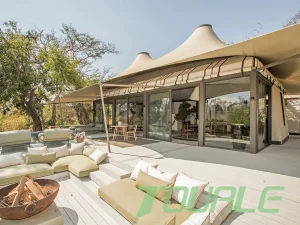
Riyadh Luxury Tension Tent: Heavy-Duty Spacious Desert Resort Structure
View Product Specs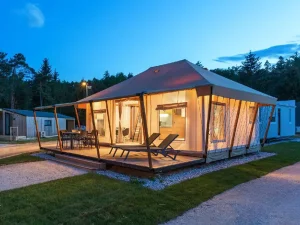
Light Luxury Safari Hotel Tent for Riyadh Eco-Resorts & Private Compounds
View Product Specs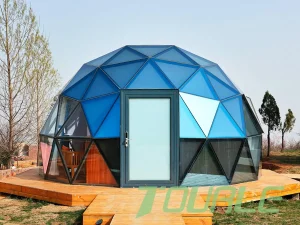
Transparent Glass Dome House with Aluminum Frame for Riyadh Stargazing
View Product Specs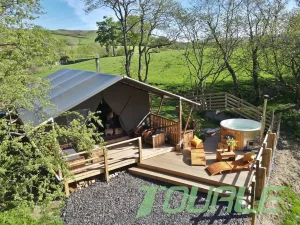
5x9m & 5x7m Glamping House Safari Tent with En-Suite Bathroom for Riyadh Projects
View Product SpecsThe Commercial & Industrial Landscape of Teepee & Bell Tents in Riyadh
The Kingdom of Saudi Arabia (KSA) is undergoing an unprecedented architectural and tourism transformation, anchored by Saudi Vision 2030. Riyadh, as the political, economic, and cultural epicenter, has become the primary battleground for innovative, sustainable, and rapidly deployable hospitality infrastructure. Among various semi-permanent architectural forms, high-performance Teepees, Bell Tents, and tensioned timber/membrane safari structures have emerged as essential assets for eco-resorts, desert retreats, cultural festivals (such as Riyadh Season), and VIP royal encampments.
Unlike traditional masonry construction, which incurs massive carbon footprints, long development cycles, and permanent landscape disruption, modular Teepee and Bell Tent systems offer zero-footprint deployment capability. In regions like the Najd Plateau and the deserts surrounding Riyadh, developers face extreme environmental contrasts: ambient summer temperatures exceeding 50°C, intense UV radiation indices (UV 11+), severe thermal fluctuations between day and night, and localized high-velocity sandstorms. To succeed in this market, Teepee product manufacturers must move beyond consumer-grade camping concepts and deliver enterprise-grade structural engineering.
Emerging Demand Drivers in the Riyadh Region
Market intelligence indicates three distinct sectors driving the massive procurement of luxury glamping units and Teepees in Riyadh:
Eco-Resorts & Desert Lodges
Luxury resort developments along the outskirts of Riyadh and Al-Ula require permanent-grade, insulated Teepees and glamping suites featuring en-suite bathrooms, integrated HVAC, and luxury interiors.
Riyadh Season & Mega Events
Temporary, large-capacity Teepee structures (such as giant wooden-pole Tipi configurations) provide iconic space for pop-up fine dining, corporate lounges, and cultural showcases during winter festivals.
VIP Royal Encampments & Private Estates
High-net-worth individuals and corporate entities require fully customized, heavy-duty glamping setups that combine modern luxury with traditional Bedouin hospitality aesthetics.
Technical Roadmap: Engineering Teepee & Bell Tents for Extreme Climates
Deploying soft-walled architectural structures in the Arabian Desert requires specialized material science, mechanical engineering, and aerodynamic modeling. Standard PVC or plain cotton canvas tents degrade rapidly under intense solar radiation and fail under gusty desert wind conditions. Leading global suppliers, such as Tourle Tent (Sichuan Tulele Technology Co., Ltd.), have established dedicated technical roadmaps specifically tailored for GCC (Gulf Cooperation Council) environmental realities.
Key Materials & Engineering Standards for KSA Projects
PVDF / Heavy-Duty PVC Architectural Membranes
Outer rainflys utilize dual-side PVDF surface-coated PVC membranes (850g/m² - 1050g/m²). This coating reflects up to 88% of solar radiation, prevents dirt accumulation during sandstorms, and provides self-cleaning properties with minimal rain maintenance.
Thermal Insulation Barrier Fabrics
To ensure HVAC efficiency in 50°C summer heat, tents utilize multi-layer composite insulation liners consisting of reflective aluminum foil, high-density fiber cotton, and fire-retardant interior fabric, reducing interior HVAC power consumption by over 40%.
Corrosion-Resistant Structural Frameworks
Framing systems employ hot-dip galvanized steel tubing (Q235/Q345 grade) with fluorocarbon powder coating or heavy-section Glued Laminated Timber (Glulam) treated against desert wood termites, fungal decay, and extreme drying splits.
Structural stability is paramount. In the open plains outside Riyadh, wind shear can generate uplift forces capable of dislodging improperly engineered structures. Advanced Teepee designs incorporate structural tension calculations, heavy-duty ground anchorage systems (expanding earth anchors or concrete footing plates), and wind dynamic release flaps capable of resisting sustained wind loads up to 10-12 Beaufort (up to 120 km/h).
China Smart Manufacturing: Supply Chain Resilience & Cost-Efficiency
For large-scale Saudi developments, procurement timelines, supply chain predictability, and rigid quality control are critical success factors. Tourle Tent operates an advanced 18,000㎡ intelligent manufacturing base in Chengdu, Sichuan, along with an in-house hardware facility dedicated exclusively to tent connector and bracket production since 2019.
By leveraging Industry 4.0 production methodologies, Tourle Tent bridges high-end architectural design with industrial-scale production efficiency:
- Precision Digital Cutting: Automated CNC fabric lasers cut multi-layer membranes with millimeter-level accuracy, ensuring tight seam fits and zero water leakage under hydrostatic pressure testing.
- High-Frequency Ultrasonic Welding: Structural seams utilize high-frequency heat sealing rather than basic thread stitching, creating 100% waterproof and tear-resistant joints.
- 100% Pre-Shipment Trial Assembly: Every OEM/ODM order undergoes full structural trial erection inside the factory prior to export packaging. This guarantees that all structural poles, canvas tension points, and hardware accessories match engineering drawings perfectly.
Localized Support & GCC Compliance Guarantees
Importing commercial structures into Saudi Arabia requires strict adherence to local regulatory frameworks. Glamping tents deployed in public hospitality venues or commercial zones in Riyadh must satisfy Saudi Standards, Metrology and Quality Organization (SASO) regulations and Saudi Civil Defense fire safety requirements.
Flame Retardancy Certification
Membrane materials must comply with global fire retardant standards, including DIN 4102 B1/M2 and NFPA 701. These fabrics self-extinguish within seconds of flame removal, preventing catastrophic fire spread in luxury camps.
HVAC & Electrical Duct Integration
Teepee units are designed with pre-engineered service entry ports for heavy-duty floor-standing or split AC units, hidden electrical conduits, and water supply/drainage piping for luxury en-suite bathrooms.
Structural Engineering Stamped Calculations
Detailed CAD blueprints, 3D structural analyses, and wind load calculation reports are provided for local Saudi municipal and Civil Defense permit submissions.
Complete Portfolio for Riyadh Campsites & Event Operators
Explore our complete OEM/ODM product matrix, from classic single-pole Teepees to expansive wood-pole multi-peak event structures.
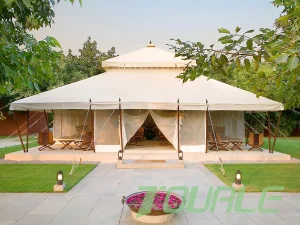
Waterproof PVC Coated Outdoor Aman Safari Lodge Tent for Desert Glamping
View Product Specs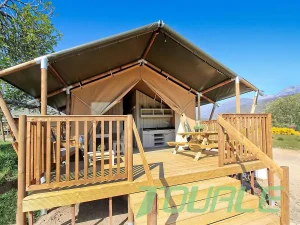
OEM Luxury Hotel Resort Safari Tent for High-End Riyadh Desert Destinations
View Product Specs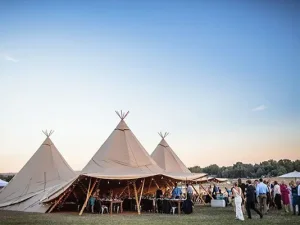
CE Certified Wood Pole Glamping Tipi Tent for Riyadh Weddings & Party Venues
View Product Specs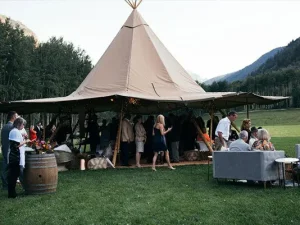
Waterproof Heavy Duty Cotton Canvas Large Party Tipi Tent for Family Glamping
View Product Specs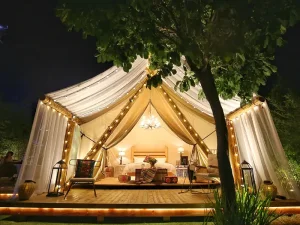
Luxury Wooden Structure Hotel Safari Tent for Desert Eco-Resort Masterplans
View Product Specs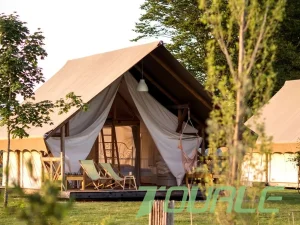
Wholesale Wooden Pole Canvas Safari Tent for Commercial Glamping Fleets
View Product Specs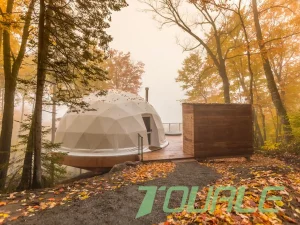
Soundproof All-Season Geodesic Dome House for VIP Desert Stargazing Resorts
View Product Specs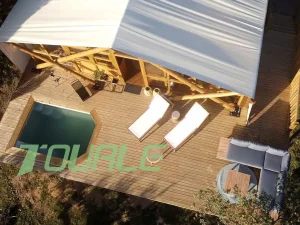
Customized Size Luxury Safari Glamping Suite for Riyadh Commercial Projects
View Product SpecsEnterprise B2B Procurement Guide & Total Cost of Ownership (TCO)
When procuring Teepees and glamping units for major developments in Saudi Arabia, initial capital expenditure (CapEx) represents only one portion of the financial equation. Intelligent investors calculate Total Cost of Ownership (TCO) over a 5 to 10-year operational horizon. Key factors influencing long-term profitability include structural lifespan, air conditioning energy consumption, cleaning downtime during sandstorm seasons, and modular replacement costs.
TCO Comparison Matrix: Commercial Teepee vs. Standard Modular Cabins
| Key Operational Dimension | Tourle Heavy-Duty Desert Teepee | Low-Cost Import Canvas Tent | Traditional Concrete/Steel Cabin |
|---|---|---|---|
| Deployment Speed | Rapid (2-3 Days per unit) | Fast (1-2 Days) | Slow (3-6 Months) |
| UV & Heat Resistance | PVDF Membrane (85%+ Solar Reflectance) | Degrades in 12-18 Months | High thermal mass require heavy AC |
| Civil Defense Fire Compliance | Certified DIN 4102 B1 / NFPA 701 | Non-compliant or basic treatment | Compliant |
| Estimated Structural Lifespan | 10-15+ Years (Frame), 8+ Yrs (Outer Shell) | 1-2 Seasons | 25+ Years |
Frequently Asked Questions for Riyadh B2B Buyers
Expert answers regarding installation, desert performance, logistics, and customization options for Saudi Arabia projects.
Start Your Riyadh Glamping Development Today
Get in touch with our technical sales team for CAD layout engineering, customized pricing estimates, material swatches, and complete product catalogs.
Send Inquiry Now