1. Executive Summary: The Structural Shift in Kenya's Commercial Accommodation Sector
Kenya's tourism and hospitality industry is experiencing a profound architectural paradigm shift. Historically centered on permanent brick-and-mortar hotel lodges or minimal canvas camping setups, the modern East African hospitality market demands dynamic, eco-sustainable, and rapid-deployment structural solutions. As international travelers increasingly seek high-end experiential eco-tourism across the Masai Mara Ecosystem, Amboseli National Park, Laikipia Plateau, Lake Naivasha, and the Coastal Swahili Coast, hospitality developers, resort owners, and commercial ranch operators face unprecedented structural challenges.
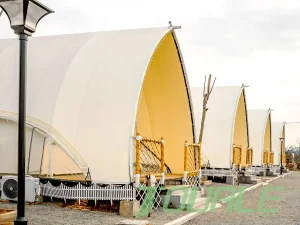
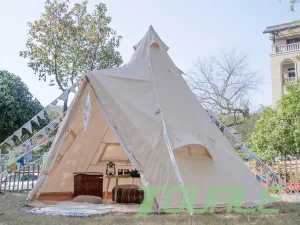
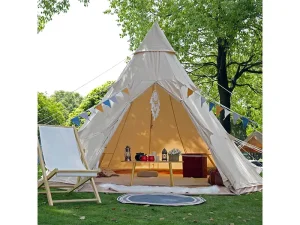
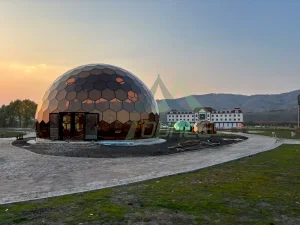
The demand for specialized architectural structures—most notably the B100 Safari Tent series, commercial-grade heavy-duty Teepees, and high-tensile Geodesic Domes—has surged exponentially. These structures offer a unique synthesis of low environmental impact, rapid capital deployment, accelerated Return on Investment (ROI), and exceptional aesthetic alignment with wild East African landscapes. This technical whitepaper analyzes the commercial dynamics, engineering standards, local climate adaptation requirements, and Chinese manufacturing advantages governing the supply chain of safari structures for B100 companies and commercial tent buyers operating in Kenya.
Key Market Insight for Kenyan B2B Buyers
Traditional concrete construction in Kenya's eco-sensitive reserves incurs massive regulatory friction (NEMA EIA compliance), high civil logistics overheads, and lengthy multi-year construction timelines. In contrast, pre-engineered heavy-duty canvas safari lodges (such as the B100 series) cut site commissioning cycles from 18 months down to less than 60 days while delivering Average Daily Rates (ADR) matching or exceeding luxury 5-star hotel suites.
2. Industry Landscape: Teepee and Safari Lodges in Kenya's Local & Global Context
To understand the growth trajectory of B100 safari tents and commercial Teepees in Kenya, one must evaluate both the localized market dynamics and global eco-resort macro-trends. The worldwide luxury glamping market is projected to expand at a CAGR exceeding 12.8% over the next decade. In East Africa, Kenya serves as the undisputed gateway for high-yield safari stays, where international tourists pay premium rates ranging from $400 to $2,500+ per night for authentic yet luxurious bush accommodations.
Localized Microclimates and Structural Challenges in Kenya
Kenya presents one of the most diverse climatic spectrums on the African continent. A commercial tent deployed in Kenya must overcome severe physical stressors that rapidly degrade standard commercial camping equipment:
Extreme UV Index (Savannah & High Altitudes)
Regions like Laikipia and the Great Rift Valley experience severe solar radiation (UV Index 11+). Standard PVC and untreated canvas quickly embrittle, fade, and tear without specialized UV-inhibiting outer membranes.
Sudden Savanna Gale Winds
Unsheltered plains in the Masai Mara encounter sudden microbursts and sustained seasonal winds up to 90–110 km/h. Structures require hot-dip galvanized steel frames and robust tension guy systems.
Monsoonal Rainfall & High Humidity
Coastal territories (Mombasa, Watamu) and rainforest areas (Kakamega) face torrential seasonal rains and humidity. Fabrics must feature hydrophobic coatings and anti-fungal treatment.
3. Engineering Superiority: China's Source Factory Manufacturing Efficiency
When procurement managers for Kenyan luxury camps source B100 safari tents and commercial Teepees, the manufacturing origin plays a decisive role in long-term structural viability and project profitability. Operating out of an 18,000㎡ modernized industrial base in Chengdu, Sichuan Tulele Technology Co., Ltd. (Tourle Tent) represents the pinnacle of Chinese high-precision structural tent manufacturing.
Vertical Integration & In-House Hardware Forging
Unlike regional traders or assembly-only outfits, Tourle Tent controls the entire manufacturing chain. Since 2019, the establishment of our dedicated hardware forging division has enabled direct control over alloy quality, welding integrity, and anti-corrosion surface treatments:
- Structural Steel Frames: We utilize Q235 high-strength structural steel tubes and T6061/T6 heavy-duty aluminum alloys, subjected to hot-dip galvanization (HDG) with a zinc layer exceeding 275g/m² to prevent rust in damp or coastal African environments.
- Textile Engineering: Outer roof membranes utilize 850g/m² to 1050g/m² PVDF/PVC coated polyester fabric, certified flame retardant (DIN4102 B1/M2 and NFPA 701 standard), 100% waterproof (hydrostatic head > 3000mm), and mold-resistant.
- Inner Breathable Canvas: Inner living quarters integrate 320g/m² to 420g/m² high-density poly-cotton canvas, offering optimal thermal insulation, noise suppression, and natural atmospheric breathability.
Pre-Shipment Trial Assembly Quality Assurance
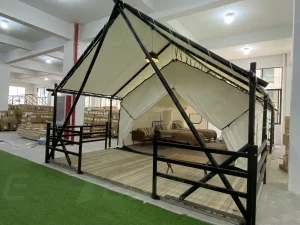
One of the primary failure points in international procurement is receiving misaligned structural connectors or missing accessories on remote installation sites deep inside African game reserves. Tourle Tent enforces a mandatory 100% Pre-Shipment Trial Assembly Protocol. Every B100 safari lodge or customized Teepee structure is fully erected and tension-tested on our factory floor before disassembly, export packaging, and sea container loading. This guarantees zero-defect arrival for Kenyan operators.
B100 & Teepee Technical Structural Specs Matrix
| Component / Parameter | B100 Safari Lodge Series | Commercial Big Teepee Series | Geodesic Stargazing Domes |
|---|---|---|---|
| Primary Frame Material | Hot-Dip Galvanized Steel / Synthetic Timber | Heavy-Duty Aluminum Alloy / Douglas Fir Poles | High-Tensile Galvanized Steel Tubing |
| Outer Roof Membrane | 850g/m² PVDF Coated Polyester (UV70+) | 900g/m² PVC Waterproof / Flame Retardant | 850g/m² Block-out PVC + Clear TPU Window |
| Inner Living Wall | 380g/m² Ripstop Poly-Cotton Canvas | 320g/m² Breathable Organic Cotton Canvas | Insulation Layer + Decorative Curtains |
| Wind Resistance Load | Up to 100 - 120 km/h (Category 11 Gale) | Up to 80 - 100 km/h | Up to 120 - 140 km/h (Triangulated Geometry) |
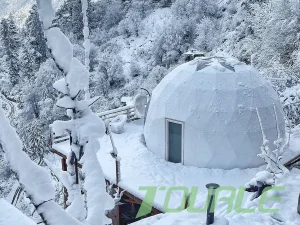
| Snow / Water Drainage | High-pitch dual peak runoff channel | Conical 60° slope rapid drainage | Spherical continuous shedding design |
| Expected Frame Lifespan | 15+ Years (Savannah Operating Conditions) | 12+ Years | 15+ Years |
4. Localized Application Scenarios Across Kenya's Tourism Clusters
Deploying luxury canvas architecture requires precise matching of structural configurations to specific Kenyan geographic environments. Tourle Tent's OEM/ODM design engineering accommodates these nuanced operational requirements:
Scenario A: The Great Savannah Ecosystem (Masai Mara & Amboseli)
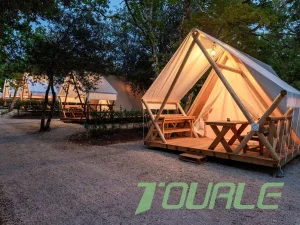
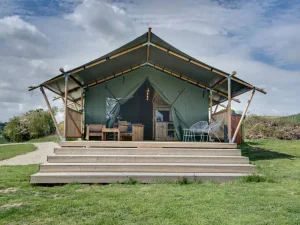
On open grassland plains, wildlife migration paths and high wind corridors dictate structural choices. B100 Safari Tents are built on elevated wooden or composite deck platforms, protecting internal flooring from burrowing animals, termites, and heavy rainfall runoffs. The dual-roof architecture creates an insulating dead-air buffer zone, reducing internal daytime temperatures by up to 8°C without power-hungry air conditioning.
Scenario B: Rift Valley & Lake Eco-Resorts (Naivasha, Nakuru, Baringo)
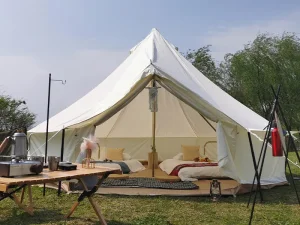
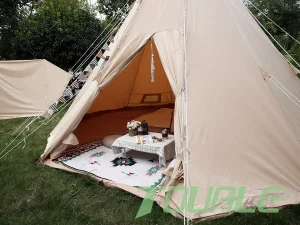
High moisture levels, insect activity, and fluctuating night temperatures characterize highland lakes. Commercial Teepee and Pyramid canvas tents supplied here incorporate ultra-fine 800-mesh anti-bug screen doors, integrated stove jacket ports for wood-burning fire stoves, and specialized hydrophobic wall coatings to prevent mold or mildew accumulation.
Scenario C: Coastal & Marine Eco-Retreats (Mombasa, Kilifi, Watamu, Lamu)
Salt spray corrosion and high tropical humidity are the primary threats along the Swahili Coast. Custom glamping units utilize marine-grade 316 stainless steel fasteners, powder-coated aluminum structural posts, and semi-transparent PVC/TPU geodesic domes designed for stargazing and sea views without rusting.
5. ROI Economics & Procurement Guidelines for Kenyan Resort Operators
From a financial performance perspective, prefabricated canvas glamping lodges offer the highest yield per square meter of any hospitality asset class in East Africa. The financial comparison between traditional brick-and-mortar hotel suites and Tourle Tent's B100 safari lodges demonstrates clear economic capital advantages:
- Capital Expenditure (CapEx): A high-end luxury B100 canvas suite costs approximately 25% to 35% of the total capital required to construct an equivalent luxury concrete hotel room.
- Deployment Velocity: A 10-unit B100 glamping camp can be delivered, imported via Mombasa Port, cleared through Kenya Revenue Authority (KRA), and fully erected on site in under 60 days.
- Asset Mobility & Eco-Permitting: Structures are classified as semi-permanent, drastically simplifying NEMA environmental impact assessments and land lease terms on local conservancy grounds.