
Industrial & Resort Dome Units (Batch 1)
Direct manufacturer models equipped with hot-dip galvanized steel frames, flame-retardant membrane covers, and modular engineering.
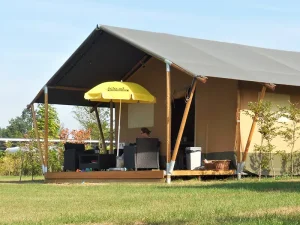
CE Certification Luxury resort tent waterproof canvas glamping safari tent for sale Manufacturers, Pricelist
View Specifications & Pricing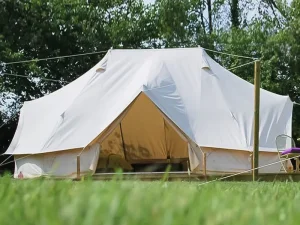
High-Quality 6X4 m large canvas tent camping outdoor emperor tent for glamping yurt tent Companies, Factories
View Specifications & Pricing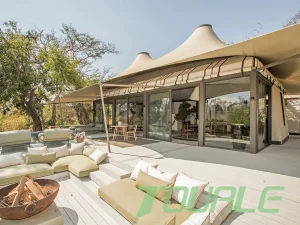
High-Quality Luxury Tension Tent A Spacious and Durable Glamping Experience Companies, Supplier
View Specifications & Pricing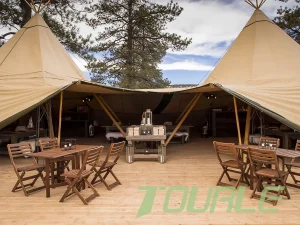
Best New Design Custom Portable Cotton Canvas Tipi Tent Glamping Resort Dinning Room Product, Pricelist
View Specifications & Pricing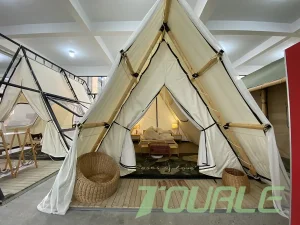
Wholesale Three -layer fabric wooden structure safari T9 tent Manufacturers, Product
View Specifications & Pricing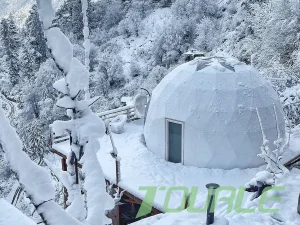
High-Quality Luxury Eco Hotel Decoration Prefab Transparent Geodesic Waterproof Dome House Tent Glamping For sale Exporters, Pricelist
View Specifications & Pricing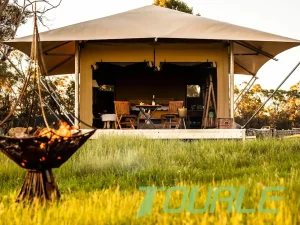
Best Glamping Hotel Safari Marquee Stretch Tent Tensioned Membrane Luxury Eco Strech Tent For Resort Factories, Factory
View Specifications & Pricing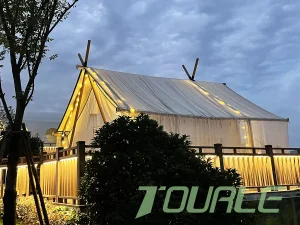
Cheap Outdoor Luxury Hotel Camping Safari Resort Room Vacation Eco-Friendly Glamping Tent Manufacturers, Products
View Specifications & PricingThe Global Expansion of Dome Structures in B2B Markets
From experiential eco-resorts to heavy industrial bulk storage, geodesic dome architecture has transitioned from niche engineering concepts to mainstream high-yield capital investments.
The global demand for wholesale geodesic dome structures has experienced unprecedented acceleration across multiple commercial sectors. Historically popularized by visionary architect R. Buckminster Fuller, the geodesic structure represents the highest structural strength-to-weight ratio known to physical engineering. Modern material advancements—such as high-tensile hot-dip galvanized steel framing, flame-retardant PVDF membrane covers, and heavy-duty structural glass panels—have transformed dome structures into robust, all-weather permanent and semi-permanent assets.
Commercial procurement officers and resort developers evaluating Wholesale Dome Companies & Company partnerships must navigate a complex landscape of structural design, environmental compliance, thermal performance, and global supply chain logistics. Geodesic domes now command significant market share across key operational verticals:
Eco-Resort & Hospitality Glamping
Geodesic dome pods offer boutique hotel operators up to 70% gross operational margins. With 360-degree nature integration, integrated en-suite facilities, and panoramic sky windows, dome suites command premium room rates ($250–$900/night) while requiring significantly lower upfront infrastructure CAPEX than traditional concrete hotel structures.
Commercial Event Spaces & Arenas
Clear-span geodesic structures ranging from 15 meters to over 80 meters in diameter provide unobstructed interior volume without internal support columns. Event staging firms, experiential marketing agencies, and festival organizers utilize large-format domes for immersive 360-degree projection mapping, corporate product launches, and temporary concert venues.
Industrial Bulk Storage & Environmental Caps
Mining operations, bulk chemical processing facilities, and municipal water treatment plants deploy large-scale industrial geodesic dome caps to prevent dust emissions and protect raw materials against extreme weathering. The self-supporting geometry eliminates internal column interference for heavy excavators and conveyor systems.
Engineering Superiority of Geodesic Domes
Why structural engineers and wholesale buyers select triangular vector distribution for extreme weather resilience.
The structural integrity of a geodesic dome relies on the distribution of stress across an interconnected network of triangles. Unlike rectangular buildings that concentrate load points on vertical load-bearing walls and right-angle joints, geodesic domes distribute force evenly across all structural nodes. This mathematical principle, known as Vector Equilibrium, ensures that localized impacts, seismic tremors, and heavy snow loads are dynamically redistributed throughout the spherical lattice.
Material Science & Structural Framework Comparison
When evaluating dome manufacturing specifications, commercial buyers must align material selection with localized environmental stress factors. Below is a comparative breakdown of primary manufacturing standards used by leading wholesale producers:
| Structural Material | Yield Strength (MPa) | Corrosion Resistance | Wind Load Capacity | Primary Industrial Application |
|---|---|---|---|---|
| Hot-Dip Galvanized Q235 Steel Tubing | 235 – 345 MPa | Zinc Layer (60–80 µm) 15+ Yrs Anti-Rust | 120 – 150 km/h (Cat 12 Typhoon) | Resort Glamping Domes, Event Venues, Multi-Season Campsites |
| T6 Aircraft-Grade 6061 Aluminum Alloy | 290 – 310 MPa | Anodized Layer (15 µm) Superior Marine Resistance | 140 – 180 km/h | Coastal Luxury Resorts, Mobile Staging, High-Humid Environments |
| Solid Polycarbonate Shell (Glass-Dome Alternative) | 60 – 70 MPa (Impact: 850 J/m) | UV-Coated Sheet (No Yellowing, 10-Yr Guarantee) | 110 – 140 km/h | Transparent Stargazing Pods, Luxury Hotel Suites, Dining Capsules |
| PVDF / Double PVC-Coated Polyester Membrane | Tensile: 5000/4900 N/5cm | Self-cleaning, Anti-Mildew, B1 Fire-Retardant | N/A (Cover Layer) | All-Weather Outer Covers, Insulated Alpine Roof Systems |
Aerodynamic Wind Deflection
The spherical outer profile minimizes drag coefficients (Cd ~ 0.3). High winds flow smoothly over and around the smooth curvature, eliminating the dangerous vacuum forces and wind-uplift phenomena that frequently damage standard flat or gabled roof membranes.
Thermal Dynamics & HVAC Efficiency
With 30% less surface area than a rectangular structure enclosing the same cubic volume, geodesic domes require significantly less energy for heating and cooling. Ambient air circulates naturally inside the unobstructed curve, preventing cold dead-zones in extreme weather.
China's Manufacturing Efficiency in Global Dome Supply Chains
How integrated hardware production, advanced CNC fabrication, and strict quality control deliver structural excellence at scale.
Global buyers, regional distributors, and resort enterprise investors frequently source from specialized manufacturing hubs in China—most notably established manufacturing operations such as Sichuan Tulele Technology Co., Ltd. (Tourle Tent). Operating out of expansive 18,000㎡+ production complexes in Chengdu, these specialized facilities combine decades of architectural fabric engineering with direct hardware manufacturing control.
1. In-House Hardware & Accessory Fabrication
Unlike assembly-only vendors who outsource metal components to third-party machine shops, tier-1 Chinese dome factories operate fully integrated hardware divisions. Steel pipe cutting, swaging, robotic welding, hot-dip galvanizing, and powder coating are completed under direct quality supervision. This eliminates component tolerance mismatches during on-site assembly.
2. 100% Pre-Shipment Trial Assembly Protocols
To prevent costly site downtime for overseas buyers, leading manufacturers perform rigorous trial assemblies prior to packing. Frame geometry, membrane tensioning systems, glass-door integration frames, and insulation liners are fully pitched and inspected on the factory floor, ensuring seamless erection upon arrival at international destination ports.
3. Rapid Customization & Modular Scale
Advanced automated CNC fabric cutters allow factories to rapidly execute customized ODM modifications—ranging from custom panoramic glass bay windows, stove jacks, and skylight configurations to specialized double-layer insulation systems designed for sub-zero alpine climates (-30°C) or scorching desert resorts (+50°C).
Localized Application Scenarios & Deployment Frameworks
Proven operational models across diverse geographies, topographies, and commercial sectors.
1. Alpine & Snow-Bound Mountain Resorts
Deployment Focus: High snow-load capability and zero condensation.
Utilizing 6m to 8m geodesic frames paired with multi-layer aluminum foil insulation blankets and wood-burning stove integration, operators in alpine regions (e.g., Swiss Alps, North American ski hubs) offer warm, luxury accommodations year-round without risking structural collapse under heavy snowpack.
2. Arid Desert & High-UV Environments
Deployment Focus: UV degradation protection and high-efficiency HVAC cooling.
Deployed extensively across Middle Eastern and desert glamping sites, outer covers treated with PVDF coatings block 99% of harmful UV rays while reflecting thermal radiation. Solar-powered ventilation fans ensure continuous air circulation to maintain optimal indoor humidity and temperatures.
3. Coastal Marine & Tropical Island Sites
Deployment Focus: Salt-mist corrosion resistance and high-wind anchoring.
For island resorts in the Caribbean or Southeast Asia, hot-dip galvanized steel frames are combined with stainless steel (316 grade) connector hubs and heavy-duty expansion ground anchors embedded in concrete footings to withstand tropical storms and ocean salt corrosion.
Enterprise B2B Procurement & Vendor Evaluation Guide
Essential technical checklist for procurement heads, site planners, and equipment leasing agencies when selecting a wholesale supplier.
Selecting the right Wholesale Dome Company requires rigorous technical evaluation beyond simple unit pricing. Buyers must examine Total Cost of Ownership (TCO), material certification compliance, structural testing documentation, and container loading efficiency.
Phase 1: Engineering & Compliance Audit
- Fire Retardancy Standards: Ensure PVC/PVDF covers comply with DIN4102 B1/M2 or NFPA 701 fire safety standards for public commercial use.
- Structural Calculation Reports: Request wind load (kN/m²) and snow load engineering validation reports signed by structural engineers.
- CE Certification: Confirm ISO9001 factory quality management and CE marking for European import clearance.
Phase 2: Customization & Layout Engineering
- Sub-Floor Platform Integration: Verify floor anchoring flange blueprints to coordinate site wooden or concrete decking work in advance.
- MEP (Mechanical, Electrical, Plumbing) Pass-Throughs: Define exact entry cutouts for water pipes, power cables, and HVAC ducting.
- Interior Modular Framing: Plan structural internal partition walls for en-suite luxury bathrooms and glass privacy doors.
Phase 3: Logistics & Installation Execution
- Container Volume Optimization: Dome frames ship as compact knock-down kits; confirm high-cube container packing densities to minimize sea freight costs.
- Installation Documentation: Ensure comprehensive 3D step-by-step installation manuals, video guides, and remote engineering advisory options.
- Spare Parts Kit: Verify inclusion of extra tensioning ratchets, spare PVC repair patches, and hardware fasteners with each shipment.
Industrial & Resort Dome Units (Batch 2)
Full range of customizable glamping tents, star capsule domes, and high-peak stretch structures for global commercial buyers.
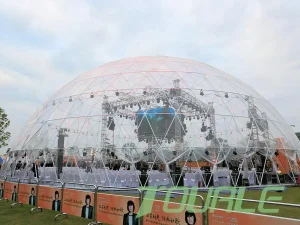
Buy Customized Size Transparent Geodesic Dome Tent for Outdoor Party Event Companies, Pricelist
View Specifications & Pricing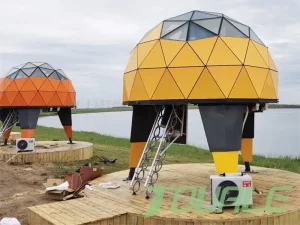
Best New Design Exclusive Star Capsule Space Technology Loft Dome Tent Panoramic Glass Window Factories, Suppliers
View Specifications & Pricing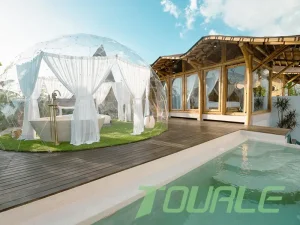
Discount Luxury Geodesic Dome Tent House Full Transparent Polycarbonate Sheet Cover Manufacturer, Products
View Specifications & Pricing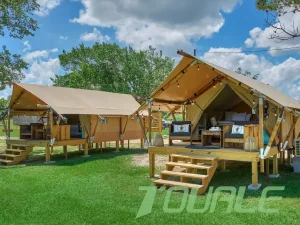
Buy New Luxury Camping Hotel Tent Canvas Wall Tent Safari Waterproof Quotes, Factories
View Specifications & Pricing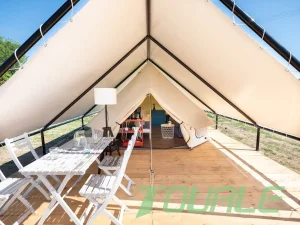
Discount 4-season Waterproof Cotton Canvas Large Family Bell Tents Luxury MongolianTent Service, Company
View Specifications & Pricing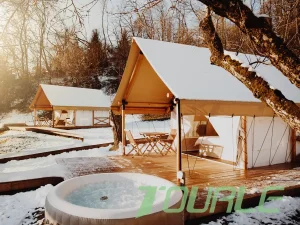
OEM High Quality China Glamping Tents Double Layer Waterproof Tent Big Winter Tent Cotton and Cold-Proof, Stable and Warm Exporters, Exporter
View Specifications & Pricing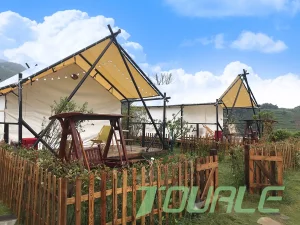
CE Certification Oxford fabric off white glamping Safari tent Product, Suppliers
View Specifications & Pricing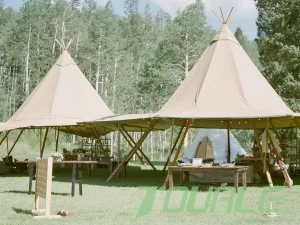
Best Two Tipi Tent Components Wedding Ceremony With Kid's Outpost Tent Outdoor Luxury Tents Manufacturer, Company
View Specifications & PricingFrequently Asked Questions (B2B Procurement Focus)
Direct answers to technical, logistical, and commercial inquiries faced by project developers and importers.
What is the typical manufacturing lead time for wholesale dome orders?
Standard manufacturing lead times for batch dome orders (e.g., 5 to 20 units) range between 15 to 25 business days following final technical drawing confirmation. Custom OEM projects involving specialized glass walls, bespoke PVC colors, or custom frame powder coating may require 30 days. Express manufacturing scheduling is available for urgent event deployment.
How do geodesic domes perform in high wind and heavy snow conditions?
Standard geodesic domes featuring Q235 hot-dip galvanized steel frames are engineered to withstand wind speeds up to 120 km/h (Category 12 typhoon rating) and snow loads up to 0.5 kN/m². For extreme alpine or coastal deployments, structural tube diameters can be scaled up (e.g., from 25mm to 32mm or 48mm steel tubing) to achieve wind load certifications exceeding 150 km/h.
What foundation requirements are necessary for site installation?
Geodesic domes do not require complex deep foundation footings. They can be installed on wooden decking platforms, concrete slabs, or directly on levelled soil/grass using heavy-duty steel ground stakes, expansion anchor bolts, or weight plate tie-downs depending on local zoning permits and terrain types.
How are heating, ventilation, and air conditioning (HVAC) integrated into the dome?
Dome covers are custom-cut during production to feature reinforced PVC ventilation portholes, stove jack openings with heat-resistant silicone rings, and dedicated HVAC duct ports. Mini-split heat pumps, solar exhaust caps, and wood stoves are routinely installed inside to ensure 4-season climate control.
What is the expected lifespan and warranty coverage of commercial dome units?
The primary structural steel or aluminum frame carries an operational lifespan of 15 to 20+ years. Double-coated PVC/PVDF outer membranes have an expected outdoor lifespan of 6 to 10 years depending on local UV exposure, and are easily replaceable without dismantling the main metal frame structure. Standard manufacturer warranties cover structural defects for 3 to 5 years.
Why partner directly with source manufacturers like Tourle Tent (Tulele Tech)?
Partnering directly with a direct source manufacturer eliminates trading company markups, guarantees access to direct engineering support, enables full OEM/ODM design flexibility, and ensures that 100% pre-shipment trial assembly checks are performed prior to export loading.