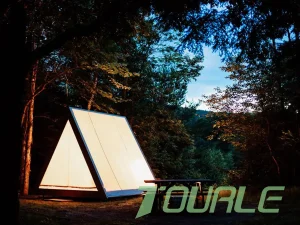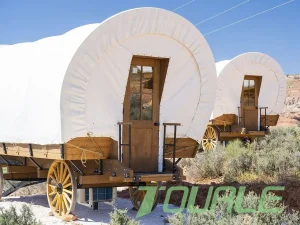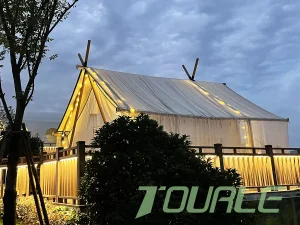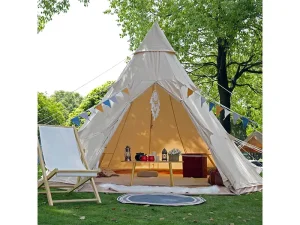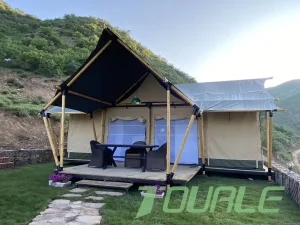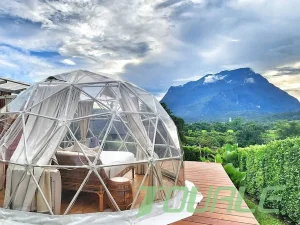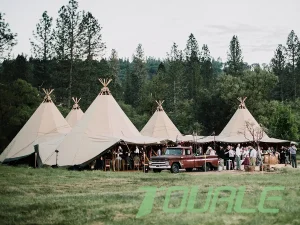
Explore our OEM-grade architectural tent configurations engineered for commercial sports arenas, glamping complexes, and multi-purpose event venues worldwide.
1. Global Industrial Landscape of OEM Volleyball Court Enclosures
The international market for temporary and permanent sports structures has experienced a paradigm shift. Modern commercial athletic operators no longer view tents as temporary stopgaps, but as highly sophisticated, weather-resilient modular real estate assets.
Customized OEM volleyball court tents provide year-round operational continuity, mitigating the revenue losses associated with adverse weather, extreme heat, UV radiation, and seasonal winter shutdowns. Whether designed for traditional hardcourt volleyball or indoor sand beach volleyball, custom clear-span structures offer column-free interiors essential for international athletic standards.
Driven by rising land acquisition costs and lengthier municipal permitting cycles for traditional brick-and-mortar facilities, modular clear-span volleyball tents represent a high-ROI alternative. Operating under companies like Sichuan Tulele Technology Co., Ltd. (Tourle Tent), source manufacturers founded in 2010 now offer comprehensive engineering services—integrating structural CAD design, finite element analysis (FEA), in-house hardware fabrication, and direct international export logistics.
Market Drivers in Modern Sports Infrastructure Procurement
Procurement directors and resort developers prioritize three principal vectors when soliciting OEM volleyball court tent quotes:
- Volumetric Freedom & Zero Obstruction: Standard FIVB (Fédération Internationale de Volleyball) regulations dictate a minimum vertical clearance of 7 meters for regional play, extending to 10.5 meters to 12.5 meters for official international tournaments. Clear-span A-frame or curved polygon structures remove internal vertical support posts, guaranteeing zero obstruction for high ball trajectories.
- Thermal Efficiency & Multi-Layer Insulation: Enclosing large cubic space requires advanced thermal envelopes. Multi-layer PVC membrane roofs with insulated air pockets and double-skinned sidewalls drastically reduce HVAC energy overhead.
- Fast-Track Permitting & Relocatability: As semi-permanent installations, modular aluminum alloy frame structures frequently qualify for accelerated building approvals compared to permanent concrete structures, allowing commercial operators to deploy courts in months rather than years.
2. Technical Specifications & Architectural Engineering Standards
When customizing an OEM volleyball court tent, quotes are calculated based on structural dimensions, wind/snow rating requirements, fabric density, and specialized ventilation infrastructure. Below is the standardized engineering specification matrix utilized by high-end B2B fabricators.
| Engineering Parameter | Single Court Standard | Dual / Multi-Court Complex | Commercial Beach Volleyball Arena |
|---|---|---|---|
| Structural Clear Span | 18m – 21m Width | 30m – 40m Width | 35m – 60m Modular Span |
| Eave Height Clearance | 6.0m – 8.0m Eave Height | 8.0m – 10.5m Eave Height | 10.5m – 12.5m Peak Height |
| Frame Material Alloy | Hard-pressed extruded Aluminum Alloy 6061-T6 (Anodized 15+ microns finish) | ||
| Roof Fabric Spec | 850g/m² PVC-coated polyester, PVDF surface treatment, Flame retardant (DIN 4102 B1, NFPA 701) | ||
| Sidewall Options | PVC Fabric Curtains | Insulated Sandwich Panels | Tempered Glass Wall + ABS Hard Wall |
| Wind Loading Capacity | 100 km/h (0.5kN/m²) | 120 km/h (0.75kN/m²) | Up to 140 km/h Reinforced Truss |
| Snow Load Rating | 0.20 to 0.35 kN/m² | 0.50 kN/m² Thermal Heated Roof | Custom Structural Steel Cable Rigging |
Utilizing aircraft-grade 6061-T6 aluminum structural profiles ensures structural rigidity while maintaining lightweight characteristics for efficient international containerized transport.
Coated with PVDF self-cleaning membranes that reflect over 88% of solar radiation, preserving internal ambient temperatures and preventing UV degradation of athletic flooring.
Designed on 5-meter bay increments, allowing operators to expand their structural footprint seamlessly from a single practice facility to a multi-court tournament hub.
3. End-to-End OEM Customization Engineering Workflow
From initial floorplan schematics to site anchoring and post-installation support, structural OEM tent customization demands a rigorous six-stage engineering protocol.
Analysis of land topography, soil load bearing capacity, local climate metrics, and FIVB court dimensions including safety run-off zones (minimum 3m around peripheral lines).
Structural simulations subject the tent model to extreme gale-force wind loads and snow loads, establishing exact aluminum profile sizing and steel connector thickness.
Selection of translucency levels, brand color schemes, anti-condensation internal layers, glass wall facades, and integrated access door hardware.
High-precision CNC cutting of aluminum extrusions, ultrasonic fabric welding, and robotic welding of heavy-duty hot-dip galvanized steel footplates.
To eliminate missing hardware risks, complete full-scale structural trial assemblies are executed on the factory floor, validating tolerances and component alignment.
Customized export packaging, detailed step-by-step structural blueprints, videos, and on-site or remote engineering guidance for fast ground deployment.
4. Regional Application Scenarios & Environmental Engineering Solutions
Deploying modular sports enclosures across distinct international climate zones necessitates tailored engineering adaptations to guarantee structural longevity and internal playability.
In alpine regions or northern latitudes, snow accumulation poses structural threats. Custom OEM solutions integrate steep-pitched 18° to 22° roof profiles, double-layer inflated thermo-roof membranes that create insulating air gaps, and optional embedded roof heating cables. Fabric covers comply with strict EN 13782 standards and regional snow load ratings exceeding 0.50 kN/m².
Arid regions experience intense thermal stress and sandstorms. Structures feature PVDF titanium-dioxide coated covers reflecting 90% of solar heat, heavy-duty industrial HVAC ducting integration, and pressurized dust-seal double doors. Anodized aluminum components prevent micro-abrasion from wind-blown silica sand.
Coastal sports resorts in Southeast Asia, the Caribbean, and Florida require high salt-spray resistance and severe typhoon anchoring. Connectors utilize 316 stainless steel hardware and hot-dip galvanized steel components with 80+ micron zinc coatings. Concrete weight-plate anchoring or chemical expansion bolts secure the structure against 130 km/h wind gusts.
With land scarcity in major metropolitan areas, sports facilities are increasingly placed on commercial building rooftops or existing parking lots. Lightweight aluminum alloy framing drastically reduces dead-weight load on building foundations, utilizing non-invasive floor clamping systems that preserve sub-surface structural integrity.
5. Technological Roadmap & Future Outlook (2025–2035)
The convergence of smart materials, green energy integration, and IoT sensor arrays is defining the next generation of modular sports architecture.
Integration of real-time stress sensors, anemometers, and snow-weight tension meters connected to cloud dashboards to automatically alert facility managers during extreme weather events.
Flexible, ultra-lightweight Building-Integrated Photovoltaic (BIPV) membrane roof covers capable of generating off-grid solar power for LED illumination and climate control.
Transition toward fully recyclable TPU (Thermoplastic Polyurethane) membrane materials that eliminate volatile organic compounds and align with global ESG sustainability targets.
Micro-perforated acoustic inner ceiling liners combined with automated louvers to eliminate eco-reverberation and optimize internal airflow dynamics specifically for beach volleyball dust control.
6. B2B OEM Quotation Framework & Cost Factor Breakdown
Navigating structural supplier quotes requires an understanding of primary cost drivers. When requesting quotes from Chinese source manufacturers, procurement teams must evaluate total cost of ownership (TCO), freight packing volume, and assembly efficiency.
Quotes vary significantly based on main profile cross-sections (e.g., 203x112x4mm vs 254x114x4.5mm or 300x125x5mm). Thicker extrusions increase raw material mass but guarantee resistance to severe wind gusts and snow loads.
Soft PVC fabric curtain walls represent the most economical baseline option. Upgrading to rigid ABS hard walls, thermal sandwich panels, or double-glazed tempered glass facades increases thermal insulation, aesthetics, and overall quote value.
Turnkey quotes include customized lighting truss mounts, HVAC wall penetrations, emergency exit door frames, gutter systems, and customized sports netting anchoring points directly integrated into aluminum purlins.
Operating out of an 18,000㎡ manufacturing facility in Chengdu, Sichuan Tulele Technology Co., Ltd. (Tourle Tent) has maintained independent hardware production since 2019. By controlling canvas cutting, frame fabrication, and hardware stamping under one roof, we eliminate intermediary markups, streamline custom OEM engineering, and execute mandatory trial assemblies prior to overseas shipping.
7. Frequently Asked Questions (FAQ) for B2B Buyers & Developers
What are the standard dimensions required for a customized single-court volleyball tent?
How do OEM volleyball court tents handle indoor beach volleyball ventilation and dust control?
What foundation options are available for temporary vs permanent installation?
How does Tourle Tent verify component fitting before international shipping?
What fire retardancy and safety certifications do your fabric covers hold?
What is the expected structural service lifespan of a modular sports tent?
Can lighting and scoreboards be suspended directly from the roof frame?
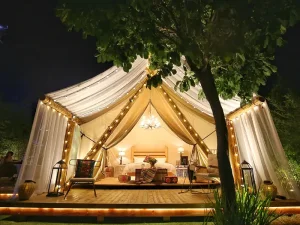
Discover additional custom glamping units, tipi structures, geodesic domes, and safari lodge tents engineered by our source factory.