
Featured Commercial Resort Tents & Glamping Units
Engineered for four-season performance, rapid ROI, and seamless structural integration across high-end hospitality venues worldwide.
1. Macro Industry Solutions: The Evolution of Commercial Glamping & Eco-Resorts
The global hospitality sector is undergoing a structural paradigm shift. Driven by changing consumer preferences toward experiential travel, eco-tourism, and immersive natural stays, traditional brick-and-mortar hotel developments face increasingly tough headwinds—high capital expenditure (CapEx), long construction cycles, stringent environmental zoning restrictions, and slow payback periods. Commercial-grade resort tents have emerged as a high-margin, scalable structural solution for modern developers.
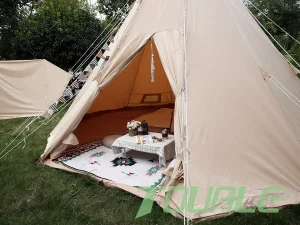
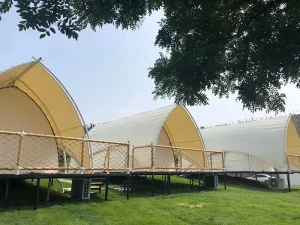
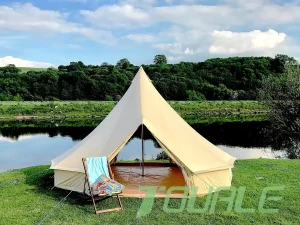
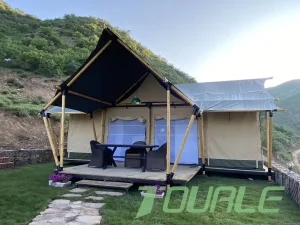
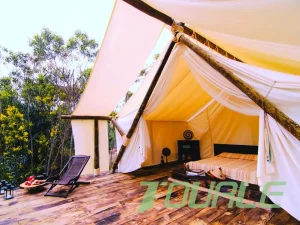
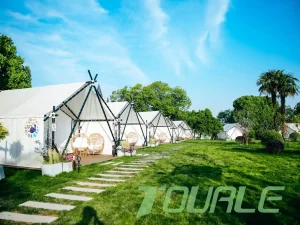
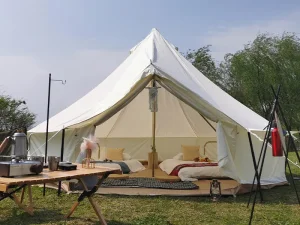
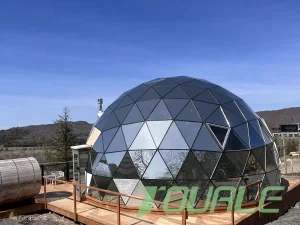
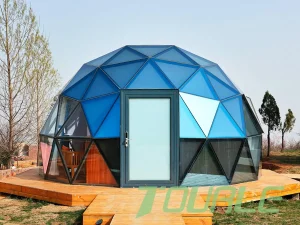
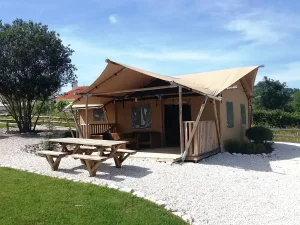
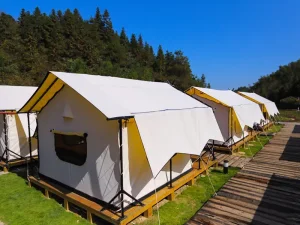
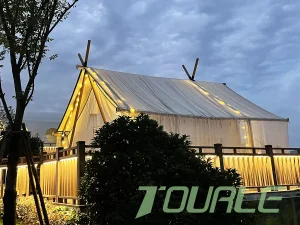
High-quality resort tent products sit at the intersection of heavy-duty architectural tensioned structures and luxury residential hospitality. By deploying prefabricated modular units—ranging from double-layered safari lodges to glass geodesic domes and heavy-duty canvas bell tents—resort owners can achieve operational readiness in a fraction of the time required for traditional concrete builds.
Financial Viability & Asset Scalability
From an investment standpoint, high-performance resort tents provide unprecedented financial flexibility. Real estate developers can execute phased deployments, launching an initial footprint of 10 to 20 luxury safari tents or bell units to generate immediate cash flow before expanding. Furthermore, because temporary architectural membranes carry lower civil engineering tax burdens in many jurisdictions, asset depreciation models work significantly more favorably for project operators.
2. Global Commercial & Industrial Landscape
The global glamping and resort tent market has matured from a niche outdoor segment into a multi-billion-dollar commercial industry. Understanding the regional market demands and structural engineering mandates is vital for international procurement officers and destination master-planners.
North American Market
High demand for four-season geodesic domes, high-peak canvas safari lodges, and winterized teepee tents fitted with internal wood-burning stoves. Code compliance focuses on snow-load ratings, NFPA 701 fire retardancy, and extreme wind resistance up to 120 km/h.
European & Alpine Regions
Driven by strict environmental and sustainability directives (such as EU REACH compliance). Preference leans toward natural timber frames, heavy organic cotton canvas blends (320g–420g/m²), low-impact ground screw foundations, and high insulation R-values.
Middle East & Tropical SE Asia
Focuses on high-tier structural shielding against UV degradation, sandstorm abrasion, high salinity, and torrential rain. Utilizes PVDF-coated PVC outer roofs (750g–1050g/m²), anodized T6 aluminum frames, and heavy-duty insect mesh ventilation.
Manufacturing Excellence: Integrated Supply Chain Engineering
Leading suppliers like Tourle Tent (Sichuan Tulele Technology Co., Ltd.) have transformed manufacturing efficiency through end-to-end integration. By operating dedicated canvas-cutting facilities alongside in-house hardware and aluminum frame fabrication units, source factories guarantee total quality control, precision tolerances, and streamlined export logistics.
3. Technology Roadmap & Material Engineering Specifications
Commercial-grade resort tents are sophisticated architectural assemblies engineered for structural longevity, guest safety, and environmental endurance. Below is a detailed breakdown of core structural materials employed in top-tier resort tent product lines.
| Component Category | Material / Structural Specification | Technical Performance Metrics | Commercial Advantage |
|---|---|---|---|
| Primary Outer Roof | PVDF / PVC Architectural Membrane (750–1050 g/m²) | 100% Waterproof, Flame Retardant (DIN 4102 B1 / NFPA 701), Anti-UV (UPF 50+) | Protects inner canvas, self-cleaning surface, 8-10 year exterior lifespan. |
| Inner Tent Wall Fabric | Heavy-Duty Cotton Canvas / Oxford Fabric (300–420 g/m²) | Hydrostatic Head > 3000mm, Anti-Mildew treated, Tear Strength > 1400N | Breathable interior prevents condensation; luxury aesthetic and acoustic damping. |
| Structural Frame System | 6061-T6 Anodized Aluminum / Galvanized Steel / Synthetic Wood | Wind Load Resistance: 80–120 km/h; Corrosion Resistance Grade 10 | Zero structural rust; engineered for extreme storm stability without deformation. |
| Geodesic Glass Panels | Double-Glazed Tempered Hollow Glass / Polycarbonate Sheets | Impact Resistant (ANSI Z97.1), Thermal Insulation U-Value < 1.8 W/m²K | Panoramic 360° views, soundproofing, suitable for luxury stargazing suites. |
| Ground Anchoring | Deep Earth Screws / Chemical Anchor Bolts / Heavy Steel Base Plates | Pull-out tension load capability > 15 kN per anchor point | Allows installation on sand, rocks, mountains, and wooden decks without damage. |
Advanced Thermal Insulation Systems
Modern luxury glamping requires year-round climate regulation. Advanced units utilize double-layer membrane air gaps combined with lightweight aluminum foil composite insulation layers. This dual-barrier system reflects up to 90% of radiant heat in desert conditions while trapping indoor heating during sub-zero winter spells.
Smart IoT & Off-Grid Utility Readiness
High-end resort tents are now manufactured with pre-engineered utility conduits inside structural frame channels. This allows easy integration of hidden electrical wiring, HVAC ducting, smart keycard lock sockets, integrated solar panel mounts, and en-suite plumbing interfaces without exposing raw pipes or wiring.
4. Localized Application Scenarios & Environmental Adaptation
No two resort sites are identical. High-performance tent engineering relies on customizing structural specs to specific microclimates and terrain profiles.
Desert & Arid Dunes
Challenge: Extreme diurnal temperature shifts, intense UV, blowing sand.
Solution: Outer PVDF shade roof, double dust-seal zippers, reflective insulation lining, anchored deep ground screw systems.
Coastal & Island Environments
Challenge: High salt spray corrosion, humidity, tropical gale-force winds.
Solution: 6061-T6 anodized aluminum alloy, 316 stainless steel tension hardware, anti-mold treated canvas, 120 km/h wind rating.
Alpine Cold & Heavy Snow
Challenge: Sub-zero temperatures, heavy snow accumulation on roofs.
Solution: Steep pitched roof geometries, integrated stove jacks with fireproof flashings, multi-layer thermal lining, reinforced steel trusses.
Forest & Rainforest Eco-Lodges
Challenge: High rainfall, tree sap, high insect density.
Solution: Self-cleaning top membranes, elevated wooden deck platforms, ultra-fine high-density mesh doors and windows.
5. Localized Support, Regulatory Compliance & Safety Guarantees
Securing building permits and fire code approvals is a crucial step for commercial resort projects. Professional manufacturers work alongside resort planners to supply full engineering calculation sheets, structural wind load certifications, and material test reports required by municipal authorities.
Global Certification Compliance Checklist
- Fire Retardancy Standards: Compliance with European DIN 4102 B1/B2, US NFPA 701, and CPAI-84 fire safety benchmarks for public assembly spaces.
- Structural Wind & Snow Load Verification: Stamped structural engineering load reports verifying stability under wind speeds up to 10-12 Beaufort scales.
- Environmental Safety: Eco-friendly fabric treatments free from heavy metals, formaldehyde, and hazardous phthalates (EU REACH compliant).
- Full Pre-Shipment Trial Assembly: Every manufactured unit undergoes trial setup at the factory base to ensure zero missing parts, exact hole alignment, and flawless stitching before sea freight loading.
Turnkey Global Logistics & Engineering Installation Support
From factory floor to remote project sites, international B2B clients receive comprehensive installation documentation, 3D setup guides, video tutorials, and on-site engineering dispatch services for turnkey resort deployments.
6. Frequently Asked Questions (FAQ) for Resort Developers
Technical, financial, and operational answers to common procurement questions.
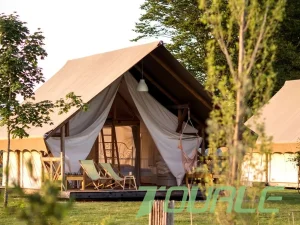
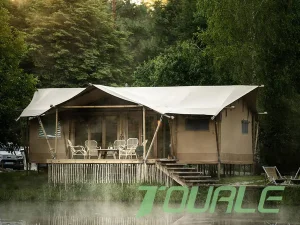
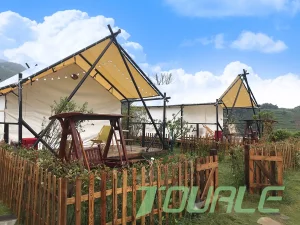
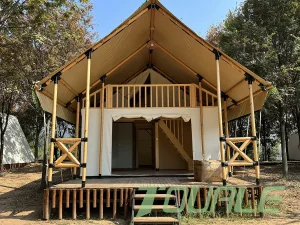
Explore Additional High-Performance Resort Tents
Browse our extended catalog of factory-direct luxury accommodation units designed for global distribution and destination glamping projects.
7. Future Outlook & Strategic Engineering Roadmap (2025–2030)
As eco-resorts evolve, next-generation tent architectures will integrate advanced carbon-neutral composite frames, self-healing PVDF membrane coatings, ultra-light flexible solar arrays, and modular prefabricated plug-and-play living pods. Investing in factory-direct, highly scalable structural tent systems allows resort developers to stay agile, minimize environmental footprint, and offer guests unparalleled luxury connected with nature.