
Featured Engineering Units (Series I)
Factory-direct structural glamping accommodations engineered for climate extremes, commercial durability, and rapid ROI.
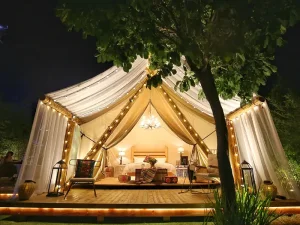
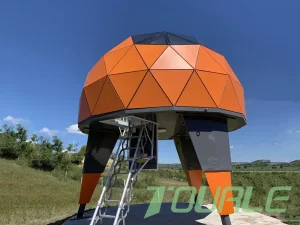
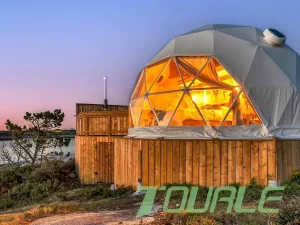
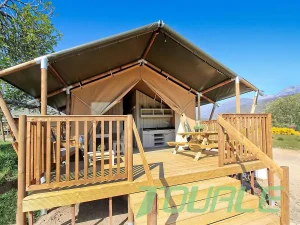
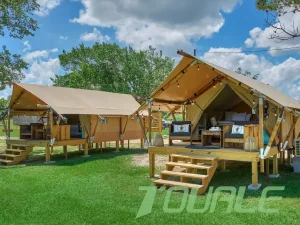
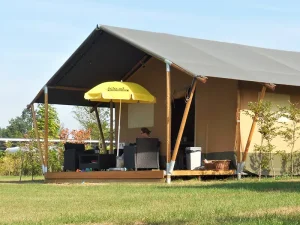
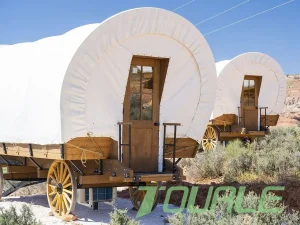
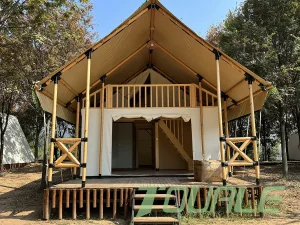
1. Global Commercial Landscape & Capital Dynamics of Large Glamping Architecture
The shift toward experiential travel and semi-permanent fabric architecture is redefining modern eco-resort economics, offering elevated Average Daily Rates (ADR) and accelerated capital payback cycles.
The global hospitality market is experiencing a structural paradigm shift. High-net-worth travelers and environmentally conscious tourists are increasingly rejecting traditional brick-and-mortar hotels in favor of immersive, low-impact outdoor stays. According to recent hospitality research, large glamping tents, safari structures, and geodesic domes deliver an average return on capital that outperforms standard boutique hotel rooms by over 300% on a per-square-meter basis.
Key commercial drivers forcing resort brands, franchise developers, and national park operators to prioritize large fabric structures include:
Low CapEx & Zero Heavy Civil Engineering
Large modular glamping tents eliminate the massive foundation and concrete pouring costs associated with traditional construction. Deployable on raised wooden decks or ground-screw pier systems, CapEx per key drops by 50% to 65%.
Compressed Permitting & Accelerated Time-to-Market
Because tensile membrane structures and modular wooden-frame safari tents are classified as semi-permanent buildings in most international jurisdictions, zoning approval timelines are reduced from years to weeks.
Premium Premium ADR & High Occupancy
Photogenic, high-ceiling canvas lodges and geodesic stargazing pods yield premium pricing on booking channels. Operators report occupancy rates averaging 72% across peak and shoulder seasons due to social media shareability.
2. Material Science & Structural Engineering Integrity
A rigorous engineering breakdown of high-performance architectural membranes, structural frame metallurgy, and climate management systems essential for four-season operational durability.
Engineering Standard Notice: Tensile Membrane Integrity
Commercial glamping structures installed in public resorts must satisfy rigorous wind load (ASCE 7-16) and structural flame retardancy (DIN 4102 B1 / NFPA 701) standards to maintain guest safety and comply with commercial insurance underwriters.
Commercial-grade large glamping tents differ drastically from consumer camping equipment. A heavy-duty resort safari tent or geodesic dome utilizes aerospace-grade extruded metals, multi-layered synthetic composite membranes, and structural anti-seismic joinery engineered to withstand continuous wind speeds up to 120 km/h (12-class Typhoon resistance) and snow loadings exceeding 0.5 kN/m².
A. Tensile Fabric Technology & Coating Chemistry
The exterior protective envelope determines the operational longevity of the unit. Leading manufacturers utilize high-tenacity polyester scrim base fabrics coated with specialized polymer matrices:
- PVDF / PVC Architectural Membranes (750–1050 GSM): Coated on both sides with Polyvinylidene Fluoride (PVDF) topcoats, providing outstanding self-cleaning properties, high UV degradation resistance (UV Index 10+ rating), zero water permeability (8000mm hydrostatic head), and chemical resistance to salt spray and atmospheric acid rain.
- High-Density Ripstop Cotton Poly-Canvas (420–550 GSM): Treated with fluorocarbon hydrophobic emulsions and anti-fungal copper-based agents, offering high breathability to eliminate interior condensation while maintaining a waterproof rating >3000mm.
- Structural Flame Retardancy Compliance: All membranes meet global fire safety codes, including European EN 13501-1 B-s2,d0, German DIN 4102 B1, and American NFPA 701, ensuring self-extinguishing behavior upon flame exposure.
B. Metallurgy & Structural Framing Systems
Extruded T6 Aluminum Alloy Frame
Utilizing high-tensile 6061-T6 or 6063-T6 aircraft-grade aluminum profiles with anodized layer thickness >15 microns. Offers high strength-to-weight ratio, complete rust immunity in marine environments, and structural lifespan exceeding 20 years.
Hot-Dip Galvanized Structural Steel
Heavy-duty Q235/Q355 carbon steel tubing finished with hot-dip galvanization (minimum zinc coating 80μm / 600g/m²). Provides robust weight stability for large spans, preventing structural uplift during extreme storm events.
Laminated Timber & Glulam Beams
Pressure-treated Douglas Fir or Siberian Larch glulam timber treated with vacuum ACQ wood preservative. Delivers natural biophilic aesthetics combined with structural elasticity and load-bearing performance suitable for heavy snow regions.
3. Chinese Industrial Efficiency & Supply Chain Dominance
How China’s integrated manufacturing clusters drive cost leadership, precision CNC production, and end-to-end OEM/ODM customizability for international buyers.
In the global market for commercial fabric structures, Chinese source manufacturers hold an unprecedented competitive advantage. By establishing centralized production ecosystems in manufacturing hubs such as Sichuan, Guangdong, and Zhejiang, leading Chinese factories integrate timber milling, aluminum extrusion, automated fabric laser cutting, and hardware stamping under one operational banner.
30%–45% CapEx Cost Optimization
Direct sourcing from Chinese factories eliminates intermediary distributor markups, allowing resort developers to procure premium-grade canvas lodges and geodesic domes at a fraction of Western production costs without compromising engineering specs.
CNC Automated Precision & Scalability
Modern Chinese glamping factories employ automated 5-axis CNC routers, high-frequency RF membrane welding machines, and automated pattern cutters. Precision tolerance within 0.5mm guarantees perfect component fitment during on-site assembly.
Trial Assembly Quality Assurance Protocol
Leading manufacturers perform 100% full-scale trial assembly of tent structural frames and canvas envelopes before export packaging. This rigorous protocol prevents missing hardware, fitting errors, and expensive installation downtime on site.
Full-Process Pre-Shipment Quality Control Lifecycle
4. Localized Application Scenarios & Environmental Adaptability
Customizing tent engineering profiles to conquer regional geographic challenges—from scorching desert sands to high-altitude alpine snow fields.
A. Desert & Arid Environments
Primary Hazards: Intense UV radiation, extreme temperature fluctuations (45°C day to 5°C night), blowing sandstorms.
Engineering Customization: Outer PVDF shade canopy with double-layer air gaps, Low-E thermal radiation reflective lining, dust-proof double-zipper sealing, and reinforced sand-plate ground anchors.
B. High-Altitude & Alpine Ski Resorts
Primary Hazards: Heavy snow loads, freezing temperatures (-30°C), sub-zero moisture accumulation.
Engineering Customization: High-pitch structural roof angles (>45°) for immediate snow shedding, multi-layer foil-faced aluminum insulation blankets, integrated log stove chimneys with fireproof silicone collars.
C. Tropical Coastal & Island Eco-Resorts
Primary Hazards: Saline atmospheric corrosion, high humidity, typhoon-force winds.
Engineering Customization: Marine-grade 316 stainless steel hardware, anodized extruded aluminum framework, 100% mold/mildew resistant PVC fabric, elevation on eco-friendly wood platforms.
5. Commercial Procurement Specification Matrix
A technical side-by-side evaluation designed for resort procurement managers, campsite planners, and hotel project engineers.
| Tent Architecture Type | Primary Framework | Wind/Snow Rating | Usable Lifespan | Optimal Application | En-suite Bathroom Ready |
|---|---|---|---|---|---|
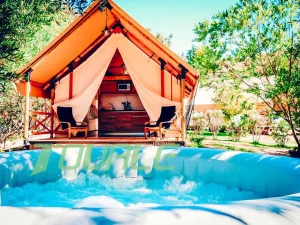
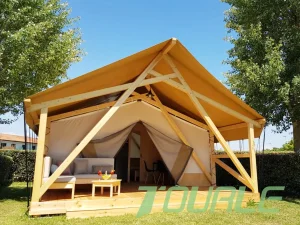
| Luxury Safari Lodge | Glulam Wood / Galvanized Steel | 100 km/h | 0.3 kN/m² | 12–15 Years | Luxury Eco-Resorts, Wildlife Parks | Full Integration |
| Geodesic Stargazing Dome | Q235 Powder-Coated Steel Pipe | 120 km/h | 0.5 kN/m² | 10–12 Years | Alpine Campsites, Desert Stargazing | Modular Partition |
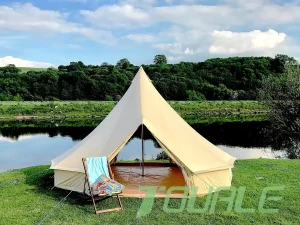
| Emperor Twin-Pole Bell Tent | Heavy-Duty Steel Central Pole | 80 km/h | Light Snow | 5–8 Years | Family Glamping, Pop-up Fleets | External Unit Recommended |
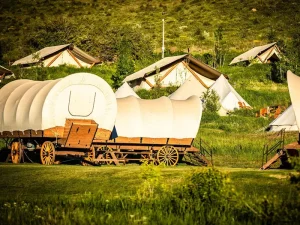
| Conestoga Glamping Wagon | Curved Steel / Treated Timber | 90 km/h | 0.2 kN/m² | 10+ Years | Themed Homestays, Western Resorts | Compact En-suite |
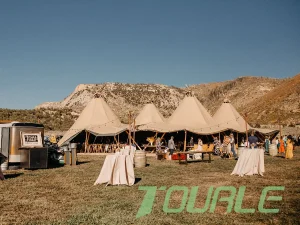
| Conical Glamping Tipi | Douglas Fir Wooden Beams | 85 km/h | Medium Snow | 8–10 Years | Weddings, Events, Dining Venues | Optional |
6. Industry Megatrends: The Next Generation of Glamping Technology
Innovations shaping the next decade of commercial resort engineering, off-grid autonomy, and smart sustainability.
IoT Smart Microclimate Automation
Integrating embedded sensor arrays to automatically regulate automated roof vents, HVAC power output, solar shading blinds, and floor heating based on real-time ambient interior humidity and temperature.
Integrated Photovoltaic Membranes
Flexible thin-film CIGS solar panels bonded directly to exterior tent roofs, generating sufficient off-grid electrical output to power interior LED lighting, device charging, and water heating pumps.
Prefab Modular En-Suite Pods
Factory-built plug-and-play sanitary pods equipped with composite walling, shower units, flushing toilets, and internal plumbing manifolds that slide seamlessly into safari and dome layouts within hours.
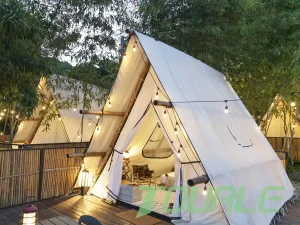
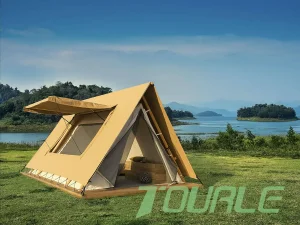
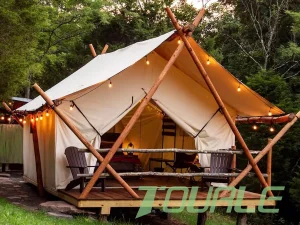
Featured Engineering Units (Series II)
Diverse architectural styles tailored for specialized resort events, family accommodation suites, and luxury pop-up stays.
7. Frequently Asked Questions (FAQ) & Procurement Clarifications
Expert technical answers regarding structural codes, global logistics, structural durability, and OEM customization.