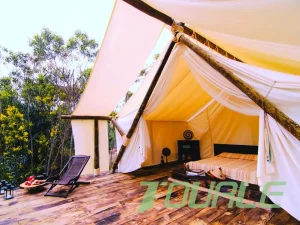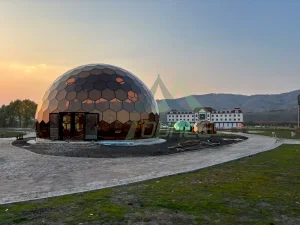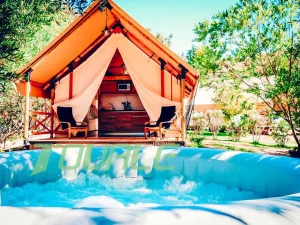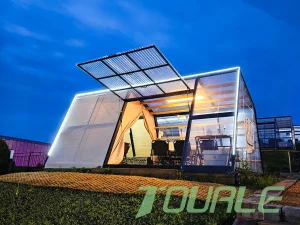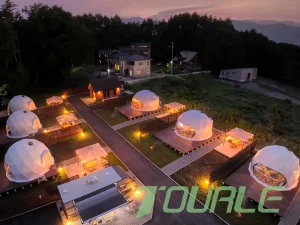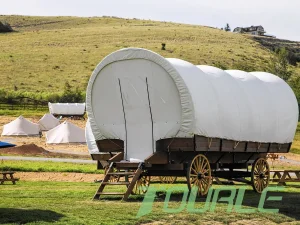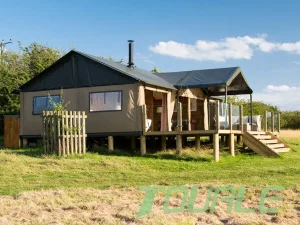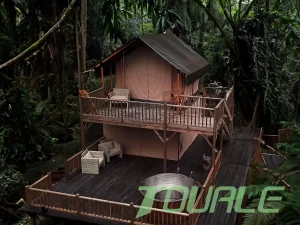
Featured Glamping Pod & Commercial Structure Portfolio
Explore our primary array of heavy-duty, weather-resistant, and high-ROI outdoor hospitality units engineered by Sichuan Tulele Technology Co., Ltd. (Tourle Tent).
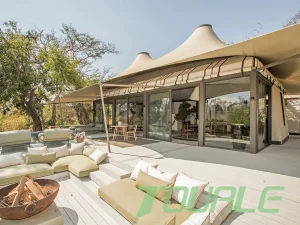
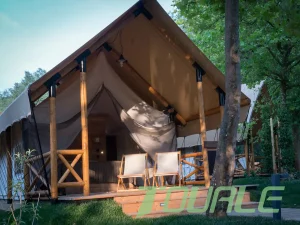
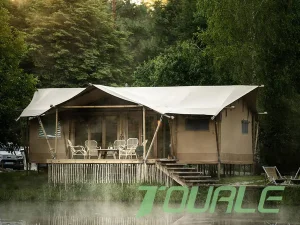
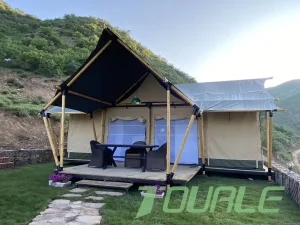
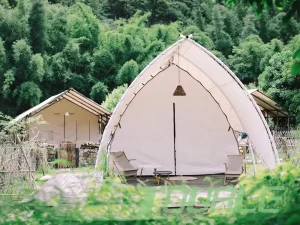
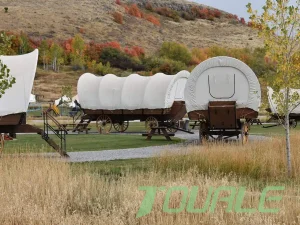
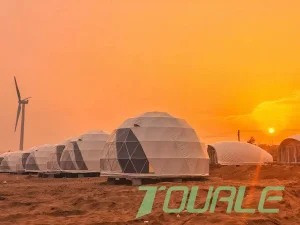
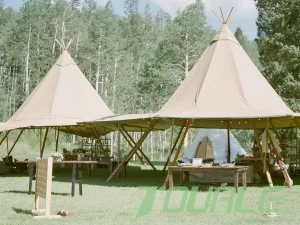
Global Commercial Reality & Market Landscape of Glamping Pods
The global experiential travel sector has undergone a structural transformation. Outdoor accommodation is no longer defined by seasonal soft-walled canvas pitching; it is now dominated by four-season high-durability glamping pods, insulated geodesic domes, and hybrid structural lodges that yield hotel-grade Average Daily Rates (ADR) while drastically curtailing civil construction timelines.
According to recent industry analytics, the global glamping market size was valued at over $3.2 Billion in 2023 and is projected to expand at a compound annual growth rate (CAGR) exceeding 11.5% through 2030. The growth engine of this market relies directly on structural Pods and modular semi-permanent units that bypass complex land zoning approvals required for traditional brick-and-mortar hotels. Investors and site operators are rapidly deploying these units to convert underutilized eco-zones, agricultural tracts, private forests, and coastal cliffside lots into premium, revenue-generating destinations.
In the US and Canada, national parks and private RV parks are undergoing rapid modernization. Developers prioritize prefabricated pods with high thermal insulation (R-values > 12) capable of handling sub-zero winters in places like Montana or extreme high-temperature summers in Utah, yielding year-round booking cycles.
Europe’s hospitality landscape is tightly regulated by ecological preservation mandates and stringent land planning permits. Eco-resort developers favor timber-frame and membrane-covered glamping pods because they sit on non-permanent screw-pile foundations, reducing site impact and accelerating building permit grants.
In desert ecosystems (GCC region) and luxury island destinations across SE Asia, ultra-high-net-worth travellers demand hyper-luxury micro-villas. Honeycomb glass domes and double-roof insulated safari pods equipped with integrated plumbing and HVAC systems represent the fastest-growing unit segment.
Technical Engineering: How Premium Pods Withstand Extreme Environments
Commercial glamping units operate under non-stop guest turnover and brutal climatic exposures. The difference between a consumer tent and a commercial-grade pod lies in structural engineering metrics: wind load ratings, tensile membrane longevity, and thermal transfer coefficients.
| Structural Subsystem | Technical Material Specification | Performance & Resistance Rating | Commercial Longevity Expectancy |
|---|---|---|---|
| Primary Frame Structure | Hot-Dip Galvanized Q235 Steel / High-Strength Aviation Aluminum Alloy Profile | Wind Resistance: Up to 120 km/h (Beaufort Scale 11-12) Snow Load: 0.5 kN/m² to 1.2 kN/m² |
15 - 20+ Years (Anti-corrosion Fluorocarbon finish) |
| Outer Roof Membrane | 850g/㎡ PVDF Synthetic Architectural Membrane / Double-Coated PVC Canvas | 100% Waterproof, Flame Retardant (DIN 4102 B1/M2, NFPA 701), Anti-UV (UPF 50+) | 8 - 12 Years (Self-cleaning surface treatment) |
| Wall Enclosure Systems | Hollow Double-Glazed Tempered Glass / Eco-Wood Composite Sandwich Panels | Thermal Insulation U-value ≤ 1.4 W/m²K Sound Reduction Index: Rw ≥ 35 dB |
20+ Years (High structural rigidity) |
| Hardware & Connectors | 304 Stainless Steel Fasteners & In-House Custom Precision Stamping Components | Salt Spray Resistance Test > 1,000 Hours (ISO 9227 compliant) | Lifetime Structural Integrity |
Uninsulated glamping structures suffer from the "greenhouse effect" in summer and extreme thermal drop in winter. High-quality pods incorporate multi-layer composite insulation matrices. This includes a PVDF outer shield, a reflective aluminum foil radiant barrier, an inner high-density rockwool or XPE insulation layer, and an interior aesthetic fabric lining. This engineered envelope lowers HVAC energy consumption by up to 45% for resort operators.
Commercial operations require absolute fire safety compliance to secure operating licenses and public liability insurance. Premium supplier fabrics must meet strict international flammability mandates. Sichuan Tulele Technology ensures all structural fabrics pass rigorous vertical flame tests, guaranteeing zero melt-dripping and low smoke emission upon flame exposure.
Why Source from China? The Tourle Tent (Tulele) Manufacturing Powerhouse
Navigating global B2B procurement requires balancing upfront unit cost against structural precision. Sourcing glamping pods directly from established Chinese source manufacturers provides an unmatched economic ratio without sacrificing technical standards.
Operated by Sichuan Tulele Technology Co., Ltd. in Chengdu, China, our specialized facility covers 18,000+ square meters. We integrate computer-controlled automated fabric CNC cutters, automated structural steel welding stations, and dedicated assembly bays capable of manufacturing over 500 units monthly.
Unlike assemblers who outsource critical components, Tourle Tent established its own hardware factory in 2019. We independently stamp, mold, cast, and finish every bracket, pole joint, tensioner, and connector, guaranteeing 100% tolerance accuracy and seamless field assembly.
Overseas project downtime destroys profitability. We mitigate risk by running full trial-assembly routines for every customized batch prior to container packing. Steel framing, outer membranes, window cutouts, and hardware counts are verified visually and dimensionally before export clearing.
- Direct Factory Pricing: Eliminates multi-layer regional distributor markups, reducing unit acquisition cost by 35% to 50%.
- Comprehensive OEM/ODM Engineering: Custom footprint modification, interior partition layout design, logo branding, and specialized color choices.
- Optimized CKD Logistics: Units are modularly packed in Completely Knocked Down (CKD) format to maximize standard 40ft High Cube container payload efficiency.
Localized Application Scenarios & Revenue Models
Glamping pods adapt seamlessly across high-value eco-tourism landscapes. Different terrains require specific unit configurations to maximize guest satisfaction and rental returns.
Heavy snow loads require steep roof angles and reinforced structural trusses. Glass domes and insulated pod shells equipped with wood-burning stoves or floor heating provide premium, cozy winter retreats.
High humidity levels demand mold-resistant, anti-fungal canvas (treated to ISO standards) mounted on elevated timber platforms to keep pests out and allow forest floor moisture evaporation.
Extreme UV exposure and blowing sand necessitate PVDF reflective outer skins and sand-sealed double-glazed aluminum window frames, paired with heavy-duty split HVAC units.
Saline air corrodes standard metal frames within months. Coastal units utilize hot-dip galvanized steel coated with marine-grade anti-corrosion paint and 304 stainless steel hardware.
B2B Procurement Guide: Capital Expenditure vs. Expected Returns
Evaluating a glamping pod project requires a clear understanding of upfront CapEx (Civil works, Unit cost, Freight, Decking) against operational yields (ADR, Occupancy Rates, Annual Maintenance).
- Average Delivered Unit Cost: $6,500 - $14,000 (Depending on model & specs)
- Decking & On-Site Utilities Hookup: $2,500 - $4,500
- Interior Furnishing & Bath Module: $3,000 - $6,000
- Total Estimated All-In CapEx per Unit: $12,000 - $24,500
- Target Average Daily Rate (ADR): $180 - $350 / night
- Projected Annual Occupancy: 55% (~200 nights)
- Gross Annual Revenue per Unit: $36,000 - $70,000
- Net Payback Horizon: 6 to 12 Months
- Zoning & Permit Alignment: Verify if your site accepts semi-permanent structures on screw-piles or floating wooden foundations.
- Climate-Specific Insulation: Specify single, double, or triple-layer roof insulation based on regional seasonal highs and lows.
- Freight & Logistics Planning: Confirm container packing formats (CKD vs. semi-assembled modules) to minimize ocean freight fees.
- Spare Parts & Maintenance Reserve: Order 3-5% critical hardware spares (zippers, tension cables, repair canvas) with primary container shipments.
Future Industry Trends: Smart, Off-Grid, and Circular Pods
The next decade of glamping architectural engineering focuses on three technological pillars: off-grid autonomy, IoT smart ecosystem integration, and zero-impact environmental materials.
Future glamping pods incorporate flexible roof-integrated photovoltaic solar arrays, rainwater filtration collectors, and greywater recycling systems, enabling remote sites without utility grid access to operate reliably.
Keyless access control, automated micro-climate thermostats, voice-controlled lighting, and predictive maintenance sensors are becoming standard in premium B2B modular accommodation units.
Leading manufacturers like Tourle Tent prioritize 100% recyclable structural steel, non-toxic eco-wood composite cladding, and halogen-free fire-retardant membrane materials to minimize environmental impact.
Frequently Asked Questions (FAQ)
What is the structural operational lifespan of a Tourle Tent glamping pod?
Are these glamping pods suitable for extreme wind, snow, and heavy rain environments?
What degree of custom OEM and ODM design capability do you offer?
How long does unit assembly take on-site, and what foundation is required?
How are units packaged and shipped internationally to lower ocean freight cost?
Do Tourle Tent fabrics carry flame retardant and environmental certifications?
What is the lead time from order confirmation to port departure?
Specialized Eco-Resort Tents & Dome Structures
Select from our specialized line of geodomes, dining cabins, heavy-duty family lodges, and custom wooden frame structures designed for turnkey resort development.