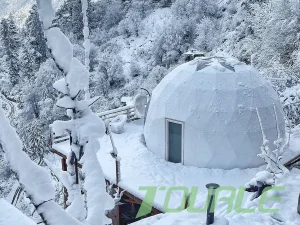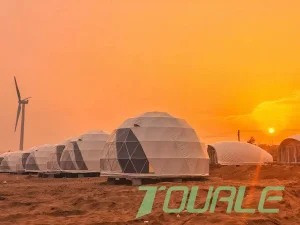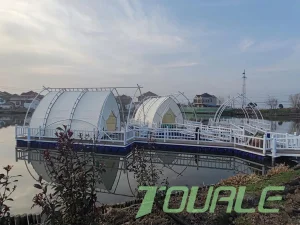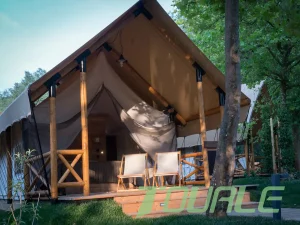
High-Performance Australia Glamping Tents: Series I
Engineered for extreme UV stability, cyclonic wind resistance, and luxury guest comfort across regional Australia.
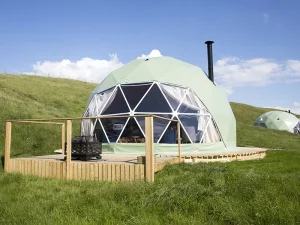
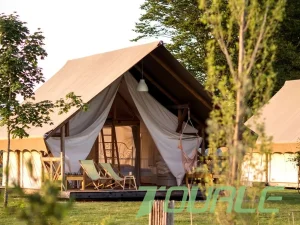
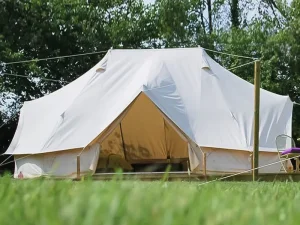
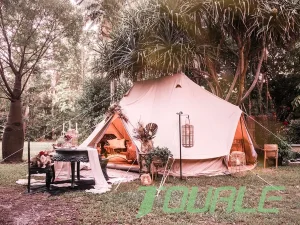
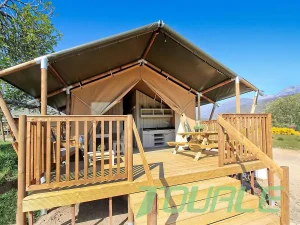
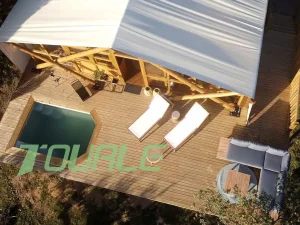
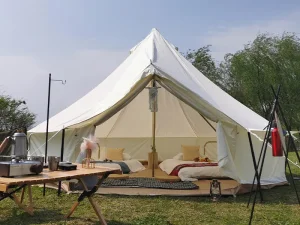
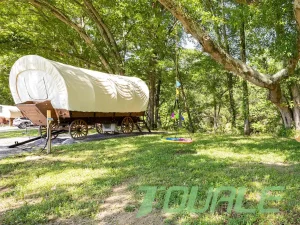
The Australian Glamping Ecosystem: Macro Market Dynamics & Solutions
The Australian luxury outdoor accommodation sector has transitioned from a niche experiential offering into a high-yield institutional asset class across New South Wales, Queensland, Victoria, and Western Australia.
Australia represents one of the world's most lucrative yet environmentally demanding markets for experiential hospitality. Driven by domestic eco-tourism, high regional room rates (ADR exceeding $350–$850 AUD per night), and a surging demand for nature-immersed luxury, resort operators require structural solutions that can withstand the continent's distinct geography. From the humid tropical environments of Far North Queensland to the arid desert interior of the Red Centre and the wind-swept southern coasts, selecting the right manufacturing partner for famous glamping tents in Australia is a critical capital decision.
High Yield & Rapid Capital Payback
Unlike traditional concrete hotel infrastructure, which requires multi-year planning and heavy civil work, heavy-duty glamping safari lodges and geodesic domes can be deployed within weeks. With average occupancy exceeding 70% in prime tourist corridors, operators achieve capital payback within 12 to 18 operational months.
Environmental Footprint & Council Approvals
Australian local councils (DA applications) increasingly favor semi-permanent, non-foundational structures that preserve biodiversity. Light-footprint screw-pile anchors and elevated timber platform sub-structures minimize ground disturbance, streamlining environmental clearance.
Extreme Weather Engineering Needs
Australian microclimates demand engineered canvas and tensioned membranes capable of handling UV Index ratings above 11, gale-force winds up to 120 km/h, strict fire retarding standards (AS 1530.2/3), and condensation control during cold Outback nights.
Global Industrial Status & Direct OEM/ODM Manufacturing
How source manufacturers like Sichuan Tulele Technology Co., Ltd. (Tourle Tent) bridge high-volume industrial engineering with custom resort specifications.
The global glamping supply chain has matured from local canvas sewing shops into high-tech industrial manufacturing ecosystems. Commercial buyers in Australia—ranging from boutique glamping start-ups to eco-resort chains—require scalable OEM/ODM manufacturing backed by strict quality assurance, standardized hardware engineering, and global export capabilities.
| Structural Parameter | Commercial Safari Lodges | Geodesic Stargazing Domes | Luxury Bell & Emperor Tents |
|---|---|---|---|
| Primary Frame Construction | Hot-Dip Galvanized Q235 Steel / Solid Anti-Corrosion Wood | Q235 High-Tensile Steel Tubing (Powder Coated) | Central Galvanized Steel Pole + A-Frame Door Supports |
| Outer Roof Membrane | 850–1050 GSM Heavy-Duty PVDF/PVC Membrane | 850 GSM Waterproof, Anti-UV Flame-Retardant PVC | 420 GSM Waterproof Ripstop Oxford / Heavy Canvas |
| Inner Fabric Shell | 900D Canvas / 320 GSM Breathable Organic Cotton | Insulation Blanket + Decorative Quilted Interior Liner | 280–320 GSM Breathable Cotton Canvas |
| Wind Load Rating | Up to 100–120 km/h (Region A/B Wind Compliant) | Up to 120–140 km/h (Triangulated Geometry) | Up to 70–80 km/h (Guy Line Anchor System) |
| UV & Fire Safety Rating | UV50+, Anti-Mildew, AS 1530 Flame Retardant | UV50+, Anti-Mildew, B1/M2 & AS 1530 Certified | UV Resistant, Water-Repellent, Mildew Treated |
| Optimal Application | 5-Star Luxury Resorts, Permanent Glamping Suites | All-Season Eco Pods, Alpine & Desert Stargazing | Pop-up Events, Rental Fleets, Semi-Permanent Sites |
Tourle Tent (Sichuan Tulele Technology Co., Ltd.) Manufacturing Guarantee
Operating an 18,000㎡ modernized factory equipped with automated fabric laser cutters, high-frequency welding lines, and an independent hardware production facility established in 2019, Tourle Tent guarantees zero-defect deliveries. Every unit undergoes full-process trial assembly prior to international container loading, ensuring seamless installation for Australian remote sites where missing components can cause costly delays.
Localized Australian Support & Building Compliance
Navigating National Construction Code (NCC) principles, AS/NZS structural standards, and severe climate engineering for commercial operations.
AS/NZS Wind Action Engineering
Australia’s structural code (AS/NZS 1170.2) classifies regions into terrain categories. Commercial safari tents and dome structures designed for Australian installation utilize reinforced tensioning systems, 80–100 μm hot-dip galvanized steel frames, and heavy earth screw anchors capable of resisting high gust velocities.
Bushfire Attack Level (BAL) & Fire Safety
Fire safety compliance is essential for bushland deployment (AS 3959). Membranes are treated with fire-retardant additives complying with AS 1530.2 (Test for Flammability of Materials) and AS 1530.3. Inner liners, insulation, and outer PVDF roofs retard flame spread while maintaining structural integrity.
Thermal Performance & UV Protection
The Australian sun accelerates fabric degradation. Tourle Tent incorporates UV-stabilized PVDF outer covers with double-layer aluminum foil insulation blankets. This thermal break maintains comfortable indoor temperatures, reducing HVAC energy consumption by up to 40% during heatwaves.
Australian Micro-Climate Application Scenarios
Tailored architectural and material configurations for distinct geographic zones across Australia.
1. The Arid Outback & Red Centre
Locations: Alice Springs, Uluru-Kata Tjuta, Flinders Ranges
Engineering Needs: High diurnal temperature swings (+40°C daytime to sub-zero night), intense sandstorm dust resilience.
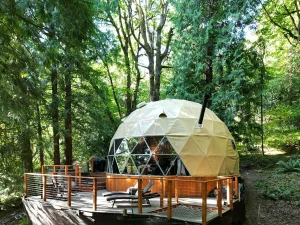
Recommended Model: Geodesic Domes with multi-layer foil insulation and heavy-duty PVC covers, or Double-Roof Safari Lodges with integrated solar HVAC vents.
2. Coastal & Marine Salt Environments
Locations: Whitsundays, Byron Bay, Margaret River, Broome
Engineering Needs: Severe marine atmospheric corrosion, high humidity, cyclonic coastal squalls.
Recommended Model: 316 Marine-Grade Stainless Steel hardware, hot-dip galvanized steel frames, PVDF self-cleaning outer membranes resistant to salt-spray oxidation.
3. Wine Regions & Rural Agritourism
Locations: Barossa Valley, Yarra Valley, Hunter Valley
Engineering Needs: Aesthetic elegance matching winery heritage, fast weekend turnarounds, high luxury interior fit-outs.
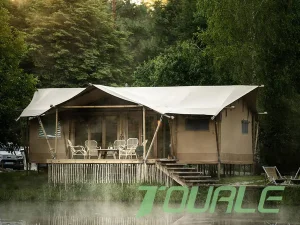
Recommended Model: Luxury Timber Pole Safari Lodges, Wooden Covered Wagon Carriage Tents, and Emperor Bell Tents with wood-burning stove jacks.
Technological Innovations & Future Outlook
Next-generation material science, IoT smart control, and sustainable modular construction powering the future of glamping.
Nanotech PVDF Membranes
Development of ultra-hydrophobic, self-cleaning PVDF membrane coatings that prevent dust accumulation in Outback environments and eliminate organic mold build-up in tropical rainforest zones.
Off-Grid IoT Climate Hubs
Integration of low-voltage solar power arrays, smart thermostat control, and automated thermal curtains designed to maintain optimal interior climate conditions autonomously.
Modular Rapid-Erect Frameworks
Standardized pin-joint steel sub-structures that reduce on-site installation time by 50%, enabling a 2-person crew to assemble a complete luxury safari unit within 48 hours.
Frequently Asked Questions for Commercial Buyers
Direct answers regarding importing, compliance, structural longevity, and custom manufacturing.
High-Performance Australia Glamping Tents: Series II
Explore specialized glass domes, multi-room family safari lodges, and heavy-duty resort units.