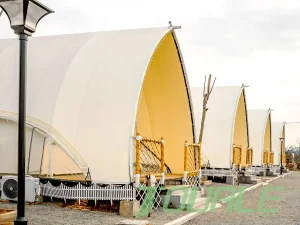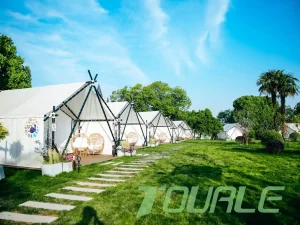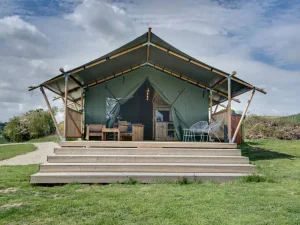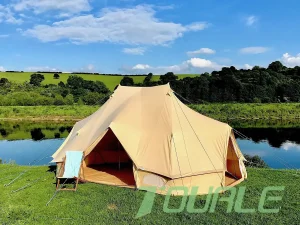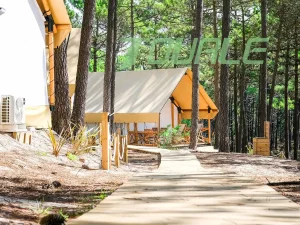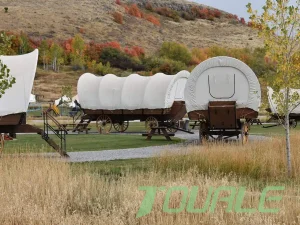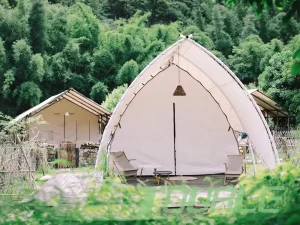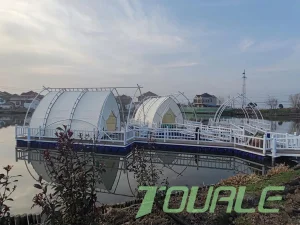
Featured Commercial Glamping & Safari Tents
Explore our top-tier engineered tent structures available directly with competitive factory bulk quote configurations.
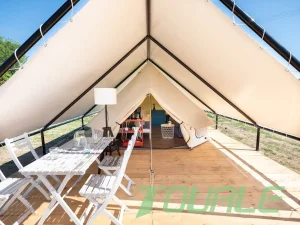
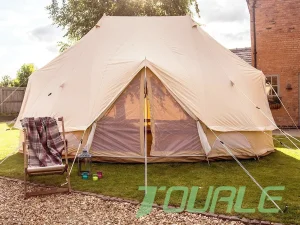
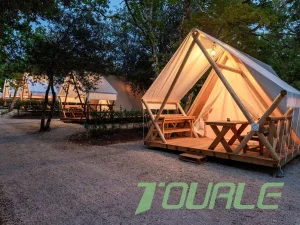
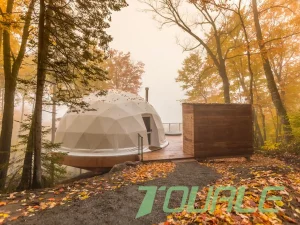
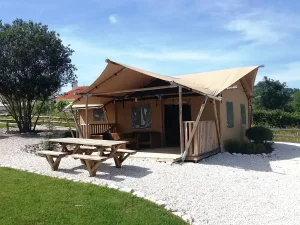
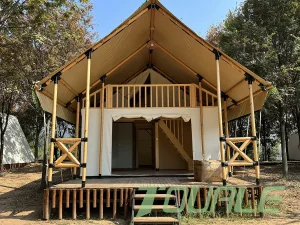
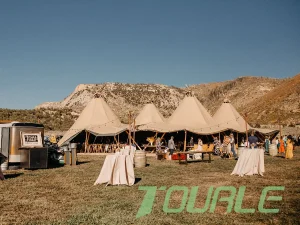
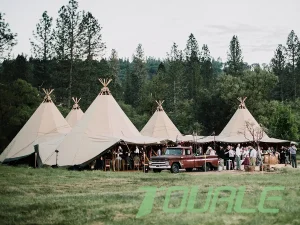
The Paradigm Shift in Luxury Outdoor Accommodation
Analyzing structural longevity, total cost of ownership (TCO), and procurement economics in the global commercial glamping sector.
The global hospitality landscape has experienced a profound structural evolution over the past decade. High-net-worth travelers and eco-conscious tourists are increasingly pivoting away from traditional brick-and-mortar luxury hotels in favor of immersive, nature-centric lodging experiences. At the intersection of this behavioral transition stands the commercial safari tent and modular glamping architecture. No longer viewed as temporary shelter, modern luxury safari tents represent sophisticated civil engineering structures capable of withstanding extreme climatic conditions while delivering standard-setting luxury, en-suite plumbing, and climate-controlled comfort.
However, for resort developers, campsite investors, and commercial event operators, evaluating purchase options under the banner of "Discount Safari Camping Tents Products & Quotes" requires navigating a complex balancing act between initial capital expenditure (CapEx) and long-term operational expense (OpEx). In the commercial B2B procurement space, true "discount" value is never achieved through fragile canvas or inferior alloy metallurgy. Rather, high-value procurement stems from direct factory integration, lean Industry 4.0 manufacturing workflows, optimized logistics packaging, and long-lasting structural design life.
By removing intermediary trading brokerages and standardizing structural frame modules, resort developers reduce structural procurement costs by up to 35% while retaining full compliance with international civil structural codes (including Eurocode 1 and IBC wind/snow load benchmarks).
Technical Roadmap & Future Architectural Outlook
Next-generation materials science and structural innovations reshaping sustainable semi-permanent hospitality lodges.
Advanced PVDF Surface Coatings
Next-gen PVDF (Polyvinylidene Fluoride) and dual-sided acrylic lacquering prevent atmospheric pollution adherence, offer self-cleaning rainwater properties, and achieve UV-stable hydrophobic defense over 10+ years of exposure.
Aerospace-Grade Alloy Framing
Shifting from traditional carbon steel to high-tensile T6 6063 Aluminum Alloy and hot-dip Q235 galvanized steel frames eliminates internal oxidation, substantially reduces shipping freight weight, and optimizes on-site erection times.
Integrated Thermal Envelope Systems
Incorporating multi-layer vacuum insulation panels, double-layer tension membranes, and breathable organic cotton liners ensures zero internal condensation while dropping indoor HVAC heating and cooling energy usage by up to 40%.
Sustainable Lifecycle & Carbon Neutral Architecture
As environmental protection regulations tighten across eco-reserves and national parks worldwide, conventional concrete foundations are increasingly prohibited. The modern safari lodge technical roadmap prioritizes zero-ground-impact helical screw pile foundations and elevated timber/composite platforms.
By utilizing fully recyclable aluminum components and sustainably harvested structural timber poles, resort operators can achieve minimal site disruption, enabling rapid deconstruction or relocation without scarring delicate ecosystems.
China Factory 4.0: Supply Chain Resilience & Cost Efficiency
Unpacking how automated manufacturing, in-house hardware fabrication, and direct sourcing create unprecedented buyer value.
Integrated Hardware & Accessories Production
Since expanding dedicated hardware facilities in 2019, key tension brackets, steel connector hubs, ground anchors, and ratchets are produced in-house under strict ISO9001 quality controls. Eliminating third-party accessory markups directly slashes baseline unit quotes for wholesale buyers.
Automated CNC Fabric Cutting & High-Freq Welding
Precision automated laser cutting software reduces fabric waste by 18%, while computerized high-frequency heat-sealing produces 100% waterproof seam welds. This precision guarantees that double-layer safari roofs fit structural frames perfectly without manual adjustment on site.
Full-Scale Pre-Shipment Trial Assembly
Every customized OEM/ODM order undergoes trial structural pitching on factory grounds before final export packing. This rigorous quality check completely eliminates missing components, incorrect hole alignment, or membrane sizing mismatches prior to overseas shipping.
Procurement Comparison: Direct Factory vs. Intermediary Brokers
| Evaluation Factor | Direct Source Manufacturer (Tourle Tent) | Third-Party Trading Intermediary |
|---|---|---|
| Baseline Unit Cost | Direct Factory Wholesale Price (30-40% Cost Savings) | Includes 25-50% Brokerage Markup |
| Customization Scope (OEM/ODM) | Full Structural, Fabric, Dimension, & Hardware Engineering | Limited to Standard Off-The-Shelf Inventory Catalog |
| Quality Control Assurance | 100% Pre-Shipment Trial Assembly & Material Certs | Random Visual Checks; Third-Party Sourcing Friction |
| After-Sales & Technical Support | Direct Access to Structural Engineers & CAD Technicians | Relayed Communications via Non-Technical Sales Reps |
| Warranty & Spare Parts Supply | Guaranteed Long-Term Factory Spare Parts Production | Subject to Supplier Availability and Trading Lifecycle |
Macro-Industry Solutions & Deployment Scenarios
Turnkey architectural deployment templates tailored for diverse commercial operations globally.
Luxury Eco-Resorts & Wilderness Lodges
Heavy-duty multi-room Safari Lodge Tents complete with covered verandas, internal drywall partitioning for en-suite luxury bathrooms, and double-layer roof flies for thermal equilibrium in harsh desert or rain-forest ecosystems.
Commercial Event & Hospitality Rental Fleets
Rapid-deploy Bell Tents, Tipi Tents, and modular Clear-Span Event Structures engineered for high pitch-and-strike frequencies, quick washing cycles, and compact transit volume for event rental businesses.
Alpine & Four-Season Stargazing Pods
Geodesic Dome Tents featuring reinforced triangular steel frame geometry, winter insulation wraps, stove chimney flashings, and panoramic anti-fog PVC/PC bay windows designed for snow loading and mountain conditions.
Localization Support, Engineering Compliance & Logistics Security
Ensuring seamless structural permitting, regulatory compliance, and damage-free global delivery.
Deploying commercial tent structures internationally requires strict adherence to regional structural codes and safety standards. A major barrier faced by hospitality developers is obtaining local building permits and operational insurance. Fully certified structural engineering documentation is crucial to passing municipal safety audits.
Fire Retardancy Compliance
Canvas and synthetic PVC/PVDF membranes meet stringent global fire rating standards including DIN 4102 B1/B2, NFPA 701, and CPAI-84, preventing flame propagation and self-extinguishing within seconds.
Wind & Snow Structural Calculations
Engineered structural schematics include stamped wind calculations (resistant up to 100–120 km/h) and snow load ratings (up to 0.5 kN/m²), supporting smooth submission to local authorities.
Export-Grade Packaging Logistics
Frame components are wrapped in protective bubble film and packed in customized steel crate frames, while canvas shells are sealed in heavy-duty PVC transport bags to eliminate moisture or transit friction damage.
Global Enterprise Procurement & Customization Matrix
A structured, step-by-step roadmap for commercial buyers requesting custom quotes and engineering layouts.
Site Consultation & Climatic Profiling
Specify geographic coordinates, ground terrain (sand, rock, soil, wooden deck), extreme temperature ranges, maximum wind speeds, and planned room layout requirements (e.g., standard bedroom vs. luxury suite with full bath).
CAD Architectural Layout & Material Selection
Our engineering team develops 2D/3D floorplans, selects optimal shell GSM canvas weight, membrane color schemes, window mesh positioning, stove jacks, and internal frame tube specifications.
Factory Direct Quotation & Production Scheduling
Receive an itemized proforma invoice detailing component costs, hardware breakdown, bulk discount tier application, FOB/CIF shipping calculations, and fixed manufacturing lead times.
Trial Pitch Assembly Video Sign-Off & Shipping
Review high-resolution trial pitch photography and video verification prior to final balance payment, followed by container loading and export documentation clearance.
Frequently Asked Questions (FAQ)
Expert engineering and commercial answers to common procurement questions.
Additional Commercial & Custom Safari Tent Models
Explore more high-performance prefabricated structures for resort developments and commercial projects.