
Discount Leading Pagoda Tent Exporter & Direct Factory Quotes
A Comprehensive Industrial Analysis on High-Peak Modular Structures, Material Science Specifications, Global Supply Chain Synergy, and Factory-Direct Enterprise Procurement.
Commercial Glamping & Architectural Tent Solutions
Factory-direct modular units designed for high-wind endurance, rapid assembly, and long-term commercial yield.
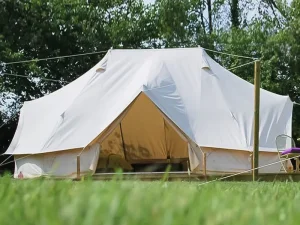
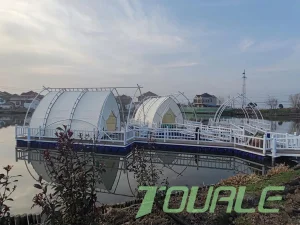
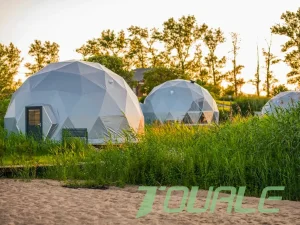
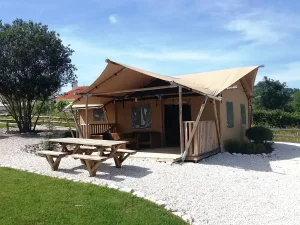
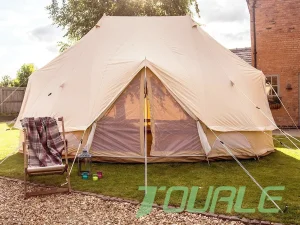
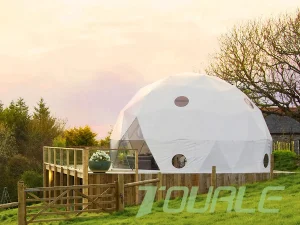
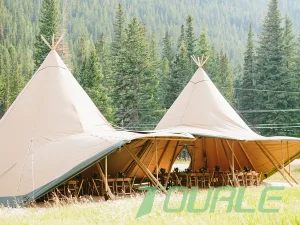
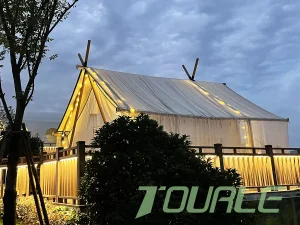
Global Commercial & Industrial Status of High-Peak Pagoda Structures
The global market for modular temporary architecture and high-peak pagoda tents is experiencing a structural paradigm shift. Valued at approximately USD 3.8 Billion in 2023, the market is projected to expand at a Compound Annual Growth Rate (CAGR) of 6.8% through 2030. This growth is driven by the rapid expansion of outdoor hospitality, high-end commercial exhibitions, sports infrastructure, and flexible industrial warehousing.
Architectural Distinction
Unlike standard frame tents, pagoda tents feature a distinctive high-peak tensioned roof suspended by an internal center pole or structural arch matrix. This dynamic silhouette creates an elevated visual profile, excellent acoustic acoustics, and superior natural water drainage, making it the preferred choice for premium brand activations and luxury resorts.
Modular Scalability
Modern commercial site developers rely heavily on modularity. Standard 3x3m, 4x4m, 5x5m, 6x6m, and 10x10m pagoda units utilize continuous guttering channels and interconnected aluminum beams, allowing operators to scale spaces infinitely without compromising wind stability or waterproofing integrity.
Capital Efficiency (CapEx)
Compared to brick-and-mortar hospitality or commercial building construction, modular pagoda installations require up to 70% lower initial capital expenditure, zero permanent foundation permits in most global jurisdictions, and deployment timelines measured in hours rather than months.
Structural Integrity Standards & Technical Specifications
To withstand extreme meteorological conditions—including severe coastal winds, heavy precipitation, and intense UV exposure—leading Chinese exporters utilize aerospace-grade aluminum alloys and advanced tensioned PVC membranes.
| Technical Component | Standard Market Specification | Enterprise Pagoda Engineering Standard | Performance Benefit |
|---|---|---|---|
| Main Frame Profile | Recycled Aluminum / Structural Steel | Hard-Pressed Extruded Aluminum Alloy 6061-T6 | Corrosion resistance > 20 years, high tensile strength (290 MPa). |
| Membrane Fabric Weight | 550g - 650g/m² PVC | 850g/m² Block-out PVC (Roof) / 650g/m² Translucent (Walls) | 100% Waterproof, thermal insulation, anti-fungal coating. |
| Flame Retardancy | Basic NFPA 701 standard | DIN 4102 B1 / M2 / CFM / NFPA 701 Compliant | Self-extinguishing fabric ensures compliance with municipal fire codes. |
| Wind Load Resistance | 60 - 80 km/h (0.3 kN/m²) | Certified up to 100 km/h (0.5 kN/m²) structural rating | Ensures guest safety and structural stability during storm events. |
| Connecting Hardware | Standard Galvanized Steel | Hot-Dipped Galvanized Steel (Zinc layer > 60μm) | Prevents rust streaks and joint structural failure under marine salinity. |
Frame Physics & Alloy Selection
The primary load-bearing skeleton utilizes 6061-T6 aluminum alloy profiles anodized to a minimum depth of 15 microns. This treatment creates an impenetrable oxide layer that resists salt spray corrosion, acid rain, and UV degradation. The engineered main profile dimensions (ranging from 64x64x2.5mm to 122x68x3mm depending on span) yield an optimal strength-to-weight ratio that lowers international shipping mass while maximizing static wind displacement.
Membrane Polymer Technology
The roof cover consists of double PVC-coated polyester textiles with an integrated PVDF (Polyvinylidene Fluoride) surface lacquer. This high-grade synthetic layer provides a self-cleaning surface where rainwater naturally washes away dust and airborne pollutants. Furthermore, block-out center layers eliminate solar heat radiation, dropping interior ambient temperatures by 5°C to 8°C compared to non-coated single-layer shelters.
The China Manufacturing Advantage: Industrial Efficiency & Cost Competitiveness
China produces over 75% of the world’s modular temporary structures. This dominance is driven by dense industrial cluster synergies, automated CNC aluminum extrusion cutting, high-frequency membrane welding technology, and streamlined raw material logistics.
In-House Tooling & Hardware
By producing all structural connectors, tensioning winches, base plates, and structural brackets in-house, Chinese manufacturing hubs like Chengdu and Guangdong eliminate third-party component markups. This total chain integration ensures perfect component fitment and eliminates project installation delays.
Automated Precision Manufacturing
Utilizing multi-axis automated CNC aluminum milling and high-frequency PVC seam welding machines guarantees dimension tolerances within ±0.5mm. Precision cutting prevents cover sagging, uneven stress distribution, or water pooling on high-peak pagoda tops.
Direct Factory Quote Pricing
Purchasing directly from an established exporter bypasses multiple layers of international trading brokers, local distributors, and brand markup, delivering authentic factory price quotes that maximize buyer profit margins and commercial project ROI.
Localized Commercial Scenarios & Global Deployment Strategies
The versatile footprint of the pagoda tent allows seamlessly adaptation to varied geographic, environmental, and commercial deployment demands across North America, Europe, the Middle East, and Southeast Asia.
1. Hospitality & Eco-Resort Reception Hubs
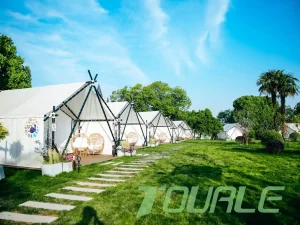
Glamping resorts and luxury campsites deploy 5x5m and 6x6m pagoda tents as central guest check-in hubs, open-air cocktail lounges, and alfresco dining centers. Styled with glass wall panels, double-glass entry doors, and internal lighting liners, pagodas provide an upscale architectural anchor that contrasts beautifully with surrounding natural landscapes.
2. Trade Exhibitions & Brand Activations
For corporate trade shows, automotive launch events, and high-street pop-up retail stores, pagodas offer distinct architectural branding opportunities. Full custom digital printing on PVC covers enables enterprise clients to project bold corporate logos, high-resolution graphics, and brand colors that attract immediate foot traffic.
3. Outdoor Weddings & VIP Catering Marquees
High-peak event marquees are a staple in the international party rental industry. Interconnected via rain gutters, multiple pagoda units form elegant walkways, catering prep stations, or VIP lounges adjacent to main clear-span wedding tents. Transparent PVC wall options allow natural daylighting while maintaining weather isolation.
4. Industrial Logistics & Temporary Security Checkpoints
Ports, logistics parks, and mining operations utilize heavy-duty pagoda shelters as temporary driver check-in booths, security gates, and covered inventory staging areas. Easy anchoring on asphalt, concrete, or raw earth via expandable bolts or weight plates enables rapid installation without foundation excavation.
Enterprise Procurement Strategy & TCO Optimization
When evaluating suppliers for commercial pagoda tents, procurement officers must look beyond initial purchase pricing and analyze Total Cost of Ownership (TCO), including freight optimization, assembly labor, maintenance intervals, and resale value.
Container Freight Density
Modular pagoda tent frames and flexible PVC covers flat-pack efficiently. A standard 40ft High Cube (40HQ) shipping container can transport up to 80-100 sets of 5x5m pagoda tents, drastically reducing per-unit sea freight expenses and minimizing ocean transit overhead per operational unit.
Assembly Labor Efficiency
Engineered with pin-connected roof trusses and slide-in PVC fabric channels, a standard 5x5m pagoda tent can be fully erected by two trained technicians in under 30 minutes without specialized crane equipment. This dramatic reduction in site labor hours accelerates commercial site launch schedules.
Asset Depreciation & Lifespan
With high-grade 6061-T6 aluminum skeletons rated for 15-20 years of continuous use and PVC covers lasting 5-8 years before membrane replacement, pagoda structures represent a long-term capital asset with strong secondary rental market resale values.
Next-Generation Trends in Modular Architectural Tents
Driven by sustainability goals and smart campsite management, the modular structure sector is adopting cutting-edge material science innovations.
Eco-Friendly Recyclable Membranes
Leading Chinese exporters are pioneering 100% recyclable, non-toxic TPU (Thermoplastic Polyurethane) and phthalate-free PVC membranes. These materials lower environmental footprint during fabrication and comply strictly with European REACH chemical safety regulations for commercial public assembly tents.
BIPV Solar Roof Integration
Integrating flexible thin-film Building-Integrated Photovoltaics (BIPV) directly onto high-peak pagoda roof slopes enables off-grid energy generation. Modern eco-resorts utilize this technology to power interior LED illumination, air-conditioning units, and guest device charging stations entirely through clean solar energy.
Additional Specialized Commercial & Event Tent Models
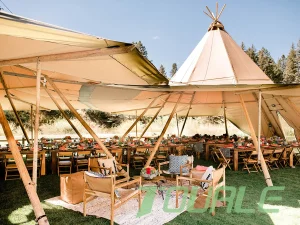
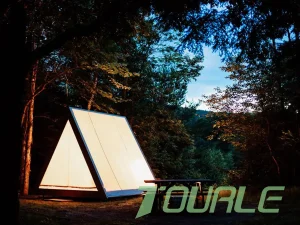
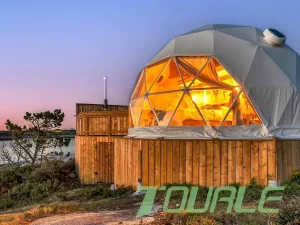
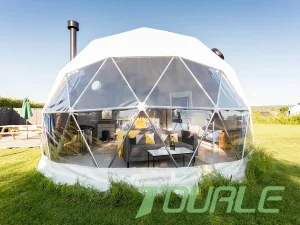
Explore our full line of OEM/ODM custom structural designs manufactured for high-volume international distribution.

Frequently Asked Questions: Global B2B Sourcing & Technical Engineering
Detailed answers regarding ordering protocols, custom OEM options, engineering compliance, and export shipping logistics.
Why is buying directly from a Chinese pagoda tent exporter significantly more cost-effective?
What engineering certifications are provided for commercial building code compliance?
Can pagoda tents be customized in non-standard dimensions, colors, and branding?
How are pagoda tents anchored on different ground surfaces (concrete, grass, decking)?
1) Steel Stakes / Pegs: For soft ground, soil, grass, or sand.
2) Expandable Anchor Bolts: For solid concrete pads, slabs, or asphalt foundations.
3) Heavy-Duty Weight Plates / Counterweight Boxes: For delicate surfaces or historical sites where ground penetration is strictly prohibited.