
Commercial Glamping Architecture Solutions
Explore our top-tier safari lodges, cotton canvas bell units, and geodesic structures directly manufactured from our integrated production base.
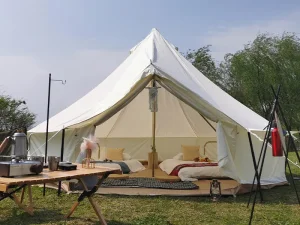
OEM Waterproof Luxury Cotton Canvas 5m Bell Tent
Explore Product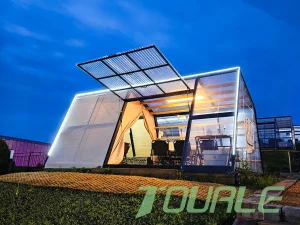
OEM Luxury Safari Dining Cabin Tent & Clear PVC Tiny House
Explore Product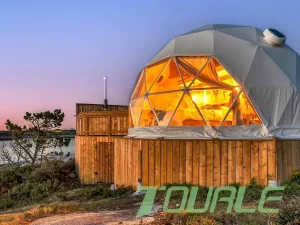
ODM Prefab Transparent Geodesic Waterproof Dome Tent House
Explore Product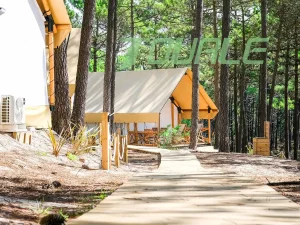
ODM Prefabricated Glamping Safari Tent Hotel Lodge
Explore Product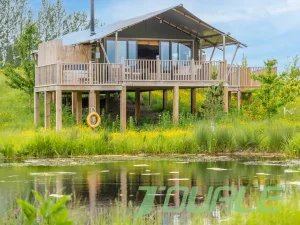
OEM Lakeside Camp Safari Tent with Wooden Stove Jacket
Explore Product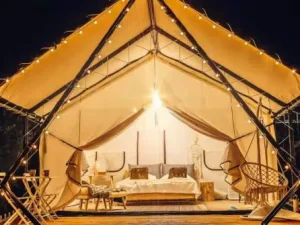
High-Quality 4-Season Waterproof Safari Glamping Resort Tent
Explore Product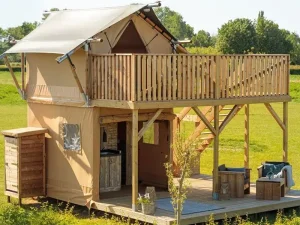
Double-Layer Prefabricated Safari Loft Family Hotel Tents
Explore Product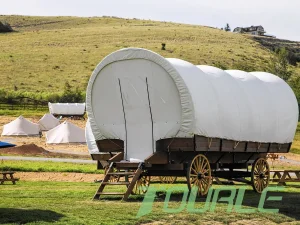
Tourism Signature Horse-Drawn Wagon Carriage Tent
Explore ProductCustom Tenda Glamping Architecture & Industrial Manufacturing Standards
An in-depth analysis of structural load engineering, fabric membrane science, and capital yield optimization for enterprise eco-resort deployment.
The global hospitality market is undergoing a paradigm shift towards experiential luxury eco-tourism. As commercial resort developers move away from carbon-intensive concrete construction, custom glamping tents (known internationally in French/Italian luxury sectors as tenda glamping) have emerged as the premier asset class for high-yield, low-impact outdoor hospitality. However, transitioning from temporary consumer camping gear to commercial-grade, multi-season architectural structures demands rigorous engineering, specialized material science, and custom OEM/ODM manufacturing ecosystems.
1. Architectural Engineering & Structural Mechanics
A true commercial glamping tent is not merely a piece of canvas over a frame; it is a engineered micro-building designed to withstand environmental stress factors across a 10 to 15-year service life. Standard consumer tents suffer from rapid UV degradation, structural deformation under wind sheer, and interior condensation accumulation. In contrast, enterprise-grade custom tenda glamping structures leverage advanced metallurgy and tensioned membrane physics.
| Component / Parameter | Standard Consumer Tent | Enterprise Tourle Tenda Glamping Grade | Structural Impact |
|---|---|---|---|
| Framework Metallurgy | Thin Aluminum / Fiberglass | Hot-Dipped Galvanized Steel (Q235) / T6 6061 Hard Aluminum / Structural Glulam Timber | Resists wind loads up to 120 km/h (Beaufort Scale 11); zero structural deflection. |
| Membrane Specification | 190T Polyester / PU Coating | 850g/m² PVDF Architectural Canvas / 280g-320g/m² Organic Waterproof Cotton Canvas | UV50+ protection, Class B1/M2 Fire Retardant, Anti-Mildew & Self-Cleaning Surface. |
| Snow Load Capacity | < 0.1 kN/m² (Collapse Risk) | 0.5 kN/m² to 1.2 kN/m² (Engineered Peak Load) | Allows uninterrupted year-round operations in high-altitude and winter environments. |
| Thermal Insulation | Single Layer (Uninsulated) | Multi-Layer Foil Bubble / Rockwool / Oxford Composite Linings | Reduces HVAC energy consumption by up to 42% in extreme heat or freezing cold. |
Operating under the corporate standard of Sichuan Tulele Technology Co., Ltd. (Tourle Tent), our manufacturing facility spans over 18,000 square meters. Founded in 2010 in Chengdu, China, we integrated our proprietary hardware production facility in 2019 to eliminate supply-chain vulnerabilities, allowing every bolt, bracket, truss connection, and tension plate to be machined in-house with micrometric precision.
China's Strategic Manufacturing & Industrial Advantages
Why global resort groups and procurement directors leverage Chinese source factories for scalable, high-precision glamping deployment.
Full-Stack Vertical Integration
Unlike European or American brand markups that rely on outsourced assembly, our Chengdu factory houses canvas tailoring, high-frequency membrane welding, CNC metal milling, and powder coating under one roof. This yields an immediate 30% to 45% cost advantage without compromising structural integrity.
Pre-Shipment Trial Assembly (Zero-Defect Protocol)
Overseas project delays caused by missing hardware or misaligned frame holes can destroy resort opening schedules. Tourle Tent enforces a mandatory 100% pre-shipment trial assembly. Every frame is built, fitted with its membrane, inspected, and video-documented before export packaging.
Rapid OEM/ODM Scalability
Whether ordering a 5-unit boutique campsite expansion or a 150-unit luxury desert resort project, China’s unmatched raw material access allows us to move from CAD architectural sign-off to full container dispatch within 21 to 35 business days.
Capital Efficiency & ROI Modeling for Hospitality Operators
Understanding the financial mechanics: Low civil engineering costs, high Average Daily Rates (ADR), and accelerated payback cycles.
The Commercial Economics of Glamping Assets
For commercial resort investors, capital allocation per key is the single most critical performance indicator. Traditional luxury hotel rooms require $150,000 to $350,000 per key in capital expenditure (CAPEX) with construction timelines extending 2 to 4 years. In contrast, a fully furnished, luxury custom safari lodge or geodesic dome unit manufactured by Tourle Tent costs between $8,000 and $28,000 per key.
Because glamping units are classified as semi-permanent prefabricated structures in most global jurisdictions, permitting cycles are slashed by up to 70%, and foundation work requires zero environmental disruption (e.g., elevated wooden platforms on helical screws).
Representative Financial Return Model
- Average Initial Unit CAPEX: $18,500 (Including Platform & En-Suite)
- Projected ADR (Average Daily Rate): $220 - $450 / night
- Target Occupancy Rate: 62% (Annual Average)
- Gross Annual Revenue per Key: $49,786 - $101,835
- Estimated Capital Payback Period: 6.2 to 11.4 Months
Global Industry Trends Shaping Tenda Glamping Architecture
Key macro trends transforming the glamping landscape over the next decade.
1. All-Season Thermal Performance
Glamping operators no longer accept seasonal shutdowns. Advanced double-layer tension membranes, integrated chimney stove ports, and air-gap insulation allow camps to operate efficiently in -20°C winter climates.
2. IoT & Smart Glamping Integration
Contemporary glamping accommodation embeds smart access keycards, automated climate control sensors, motorized sky-windows, and integrated modular luxury bathroom pods.
3. Hyper-Instagrammable Design Aesthetics
Architectural silhouettes such as transparent geodesic stargazing domes, multi-level safari lofts, and carriage-style signature units drive organic social media marketing for resorts.
4. Zero-Impact Eco-Permitting
Eco-sensitive national parks and coastal reserves enforce strict non-permanent building codes. Prefabricated bolt-together glamping frames ensure complete site restorability.
Localized Application Scenarios & Terrain Engineering
Customized engineering configurations tailored to specific environmental climates and geographic terrain conditions.
High-Altitude Mountain & Alpine
Engineered with heavy-duty Q235 steel trusses and tensioned outer flysheets to withstand high wind sheer and heavy snow shedding. Features integrated wood-stove jack openings with heat-shield fiberglass collars.
Coastal & Island Moisture Environments
Utilizes hot-dipped galvanization or 6061-T6 aluminum frames treated with marine-grade anti-corrosion powder coatings. Membrane materials incorporate anti-fungal and salt-mist resistance additives.
Arid Desert Retreats & Dunes
Double-layer shade roofs designed to deflect direct solar radiation. High-grade PVDF membranes block 99% of UV rays, paired with deep ground screw anchoring systems for loose sand stabilization.
Localization Support & Compliance Assurance
Meeting international building standards, localized fire safety regulations, and customs clearance certification.
Regulatory Certification & Testing Reports
Importing prefabricated glamping structures requires strict compliance with regional building standards. Tourle Tent supplies complete documentation packages including:
- CE Certification: Compliance with European Union safety, health, and environmental protection requirements.
- ISO 9001 Quality Management: Certified factory quality control across cutting, stitching, and metal machining.
- Fire Retardancy Standards: Fabric materials tested to meet European DIN 4102 B1/M2 and US NFPA 701 / CPAI-84 standards.
- Structural Calculations: Certified engineering calculations for wind load, snow load, and tensile strength available for local authority permit approvals.
Turnkey On-Site & Remote Engineering Support
We bridge the gap between Chinese source manufacturing and local field installation:
- 3D CAD & BIM Models: Detailed spatial planning models for integration into regional site developer blueprints.
- Step-by-Step HD Video Guides: Every custom order is delivered with customized video instructions matching coded tent components.
- On-Site Engineering Supervision: Senior installation engineers available for dispatch to oversee major resort projects worldwide.
- After-Sales Component Warranty: Long-term supply guarantee for replacement hardware, skin membranes, and repair kits.
Specialized Glamping & Structural Tent Series
Explore our wedding tipis, steel-frame safari units, tension structures, and customized hotel tents.
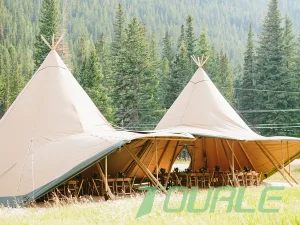
Luxury Outdoor Glamping Tipi Tents for Event & Wedding
Explore Product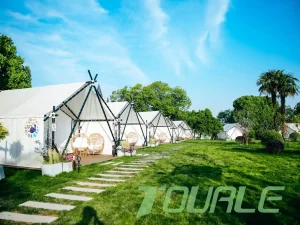
Steel Structure Double Fabric Quick-Assembly Safari Tent
Explore Product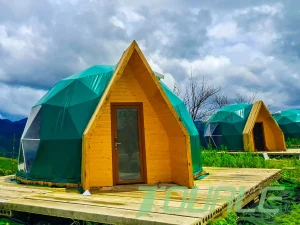
ODM Architectural Unique Dome Tent Luxury Glamping House
Explore Product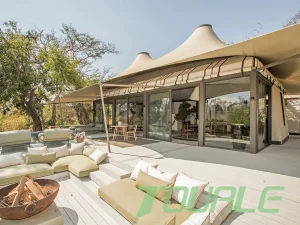
High-Quality Luxury Tension Tent for Spacious Glamping
Explore Product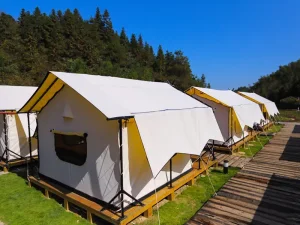
OEM 4x6.4m B100 Outdoor Family Camping Luxury Resort Tent
Explore Product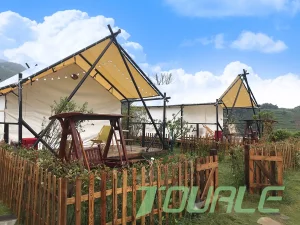
CE Certified Off-White Oxford Fabric Safari Glamping Tent
Explore Product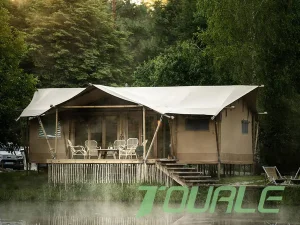
Wooden Structure Luxury Safari Glamping Tent (5-8 Person)
Explore Product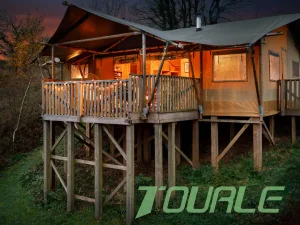
Luxury T-Type Safari Tent Hotel House Solution
Explore ProductB2B Procurement & Technical Q&A
Direct answers to the most critical technical and logistical questions asked by resort owners and commercial buyers.
Q1: What is the estimated operational lifespan of Tourle custom glamping tents?
Our structural frames (hot-dipped galvanized steel and T6 hard anodized aluminum) carry an engineered structural lifespan of 15+ years. The outer PVDF weather membranes last between 8 to 12 years depending on climate UV intensity, while inner cotton canvas linings typically last 6 to 10 years. All skin layers are fully modular and easily replaceable without dismantling the main structural framework.
Q2: How do your factories handle customized OEM/ODM structural requests?
We operate a full-service ODM/OEM engine. Clients submit site plans, layout ideas, or dimensional targets. Our engineering team generates 3D CAD/BIM structural renderings within 72 hours. Once approved, we fabricate customized steel connectors, tailored canvas patterns, specific window/door placements, and custom colorways directly in our 18,000㎡ Chengdu plant.
Q3: Are your tenda glamping structures certified for severe weather conditions?
Yes. Standard models are engineered to withstand wind speeds up to 100-120 km/h (Beaufort scale 10 to 11). For alpine or winter deployment, we add specialized roof trusses and tension cables capable of handling snow accumulation up to 0.5 - 1.2 kN/m². Fabrics meet European DIN 4102 B1/M2 fire safety standards.
Q4: What is the typical production lead time and international shipping timeline?
Standard custom orders require 21 to 35 calendar days for manufacturing and pre-shipment trial assembly. Ocean freight shipping times vary by destination: North America (18-25 days), Europe (25-35 days), Southeast Asia (7-12 days), and Australia (15-20 days). Expedited air or rail freight options are available for urgent sample orders.
Q5: Can electrical wiring, plumbing, and en-suite bathrooms be integrated into the tents?
Absolutely. Our glamping tent structures are specifically designed to be mounted on raised timber or concrete platforms. Floor membranes and canvas walls feature pre-engineered port passages for electrical conduits, HVAC lines, water supply, and drainage systems, enabling luxury hotel-style en-suite bathroom installations.