
Top Commercial Safari & Glamping Tent Solutions
Explore our flagship safari lodge frameworks and geodesic architectural structures built for immediate global export and modular commercial installation.
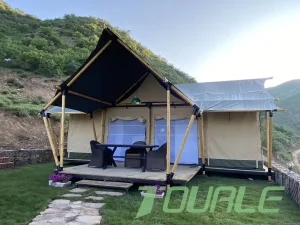
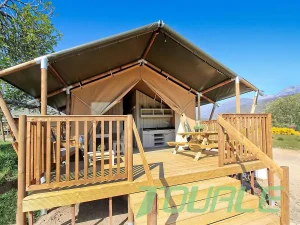
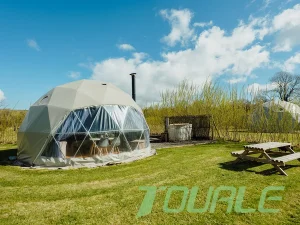
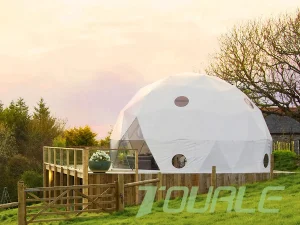
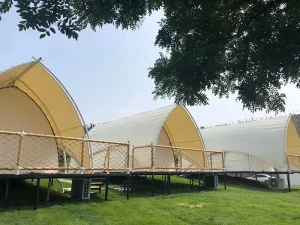
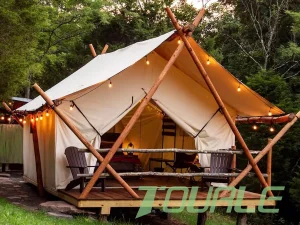
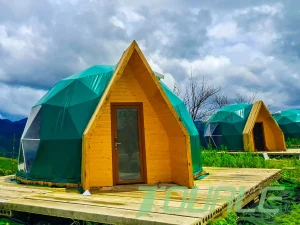
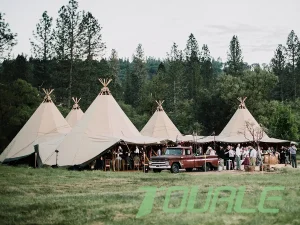
The Global Commercial Landscape of Heavy-Duty Safari Tents
The global outdoor hospitality market has experienced a structural paradigm shift, evolving from rustic temporary campsites into high-yielding, capital-efficient luxury eco-resorts. At the center of this transformation is the commercial demand for custom safari tent sales. B2B buyers, institutional investors, and land developers are increasingly selecting heavy-duty canvas lodge architectures over conventional concrete hospitality structures due to significantly lower Capital Expenditure (CapEx), accelerated project delivery timelines, and unmatched average daily room rates (ADR).
Hospitality groups operating across North America, the Mediterranean coast, Southern Africa, and Southeast Asia require semi-permanent structural units that combine structural compliance with uncompromised guest luxury. Custom safari tents serve as high-margin real estate assets capable of generating substantial Revenue Per Available Room (RevPAR). Unlike standard recreational tents, commercial safari lodges feature multi-layered thermal membranes, modular internal layouts for en-suite bathrooms, and engineered load-bearing framing systems capable of handling hurricane-force wind loads and heavy snowfall.
Material Science and Structural Integrity Standards
Achieving commercial longevity in harsh wilderness conditions requires strict adherence to advanced textile science and precision metallurgical fabrication. Professional safari tent suppliers must engineer every component to withstand severe environmental stressors, including intense UV degradation, extreme temperature fluctuations, fungal spore growth, and structural shear forces.
Structural Load Framing
Framework options utilize high-grade Hot-Dip Galvanized Steel tubes or Q235 structural steel components combined with heavy-duty solid timber poles (such as anti-corrosive pressure-treated synthetic pine or teak). Connectors are laser-cut and robotically welded to ensure flawless load-bearing connections capable of enduring wind loads up to 100 km/h (Beaufort Scale 10).
High-Tenacity Outer Fly
The exterior roofing layer incorporates heavy-duty 850g/m² PVDF or PVC architectural membrane technology. It features self-cleaning properties, 100% hydrostatic waterproofing (water column resistance > 10,000mm), anti-tear ripstop reinforcement, and UV-inhibiting chemical treatments to prevent fabric embrittlement under prolonged sun exposure.
Breathable Inner Canvas
Inner tent walls use premium 420g/m² Poly-Cotton ripstop canvas or Oxford fabric treated with anti-mold, anti-fungal, and flame-retardant coatings meeting international standards such as DIN 4102 B1, CPAI-84, and NFPA 701. This ensures high vapor permeability to prevent interior condensation while maintaining strict fire safety compliance.
| Structural Component | Material Specification | Compliance / Testing Standard | Commercial Benefit |
|---|---|---|---|
| Primary Frame | 6061-T6 Aluminum Alloy / Galvanized Steel / Pressure-Treated Pine | GB/T 6892 / ISO 1461 Anti-Corrosion | Zero rust, structural life expectancy over 15+ years in harsh maritime environments. |
| Roof Outer Membrane | 850g/m² Double-Coated PVDF / PVC Membrane | DIN 4102 B1 / NFPA 701 Fire Retardant | Self-cleaning surface; complete block-out insulation layer reduces HVAC cooling costs. |
| Lodge Inner Fabric | 420g Ripstop Poly-Cotton Canvas / Heavy Oxford | Hydrostatic Pressure > 5000mm, UV50+ | Combines luxury aesthetic with high breathability; eliminates internal moisture build-up. |
| Sidewall Mesh | High-density anti-mosquito synthetic mesh | Tear Strength > 400N | Provides maximum passive ventilation while maintaining an impenetrable insect barrier. |
China Factory Efficiency & Industrial Scale Superiority
When procuring commercial glamping assets at scale, global resort developers face distinct challenges regarding lead times, customization capabilities, component precision, and total procurement cost. Operating from robust industrial manufacturing hubs such as Sichuan, China’s integrated manufacturing ecosystem offers unmatched structural synergy for international enterprise buyers.
Fully Integrated In-House Hardware Fabrication
Unlike third-party aggregators, leading Chinese source factories operate specialized in-house hardware plants dedicated exclusively to structural connectors, tensioning systems, alloy joints, and base anchors. This end-to-end integration eliminates component tolerance mismatches, ensures precise alignment during field installation, and speeds up prototyping cycles for custom architectural designs.
Zero-Defect Trial Assembly Inspection Protocol
To eliminate expensive field delays at remote overseas sites, export-oriented factories perform full-scale trial assemblies prior to packing. Every frame, canvas panel, tension cable, and connector hardware kit is erected in-factory to verify structural fit, seam waterproofing, and tension tolerances. Overseas buyers receive complete, pre-tested, plug-and-play installation kits.
By leveraging advanced automated CNC fabric-cutting machines, robotic pipe-bending setups, and large-scale industrial sewing lines, Chinese manufacturers maintain exceptional production throughput while lowering per-unit production costs by 30% to 50% compared to Western regional fabricators. This efficiency translates directly into accessible luxury for resort operators worldwide.
Localized Application Scenarios Across Diverse Climate Zones
Custom safari tents are highly versatile modular structures, capable of engineered adaptation to extreme geographical environments and distinct commercial operating models.
Desert & High-UV Dunes
Challenge: Intense thermal radiation, sandstorms, UV degradation.
Engineering Solution: Multi-layer canvas with reflective PVDF flysheets, extended shade overhangs, double-shielded heavy zippers, and reinforced ground screw anchors designed for deep sand stability.
High-Altitude Alpine & Cold Regions
Challenge: Sub-zero winter weather, snow load accumulation, thermal loss.
Engineering Solution: Integrated flame-retardant thermal insulation liners, wood-burning stove jack vents, insulated floor platform framing, and high-pitch roof geometries for efficient snow shedding.
Coastal Typhoon & Humid Tropics
Challenge: High-velocity coastal winds, salt-mist corrosion, humidity, mold.
Engineering Solution: 316 stainless steel or anodized 6061-T6 aluminum hardware, anti-mold treated breathable canvas, 360-degree ventilation mesh panels, and high-tension guy-wire systems rated for high wind speeds.
The Enterprise B2B Safari Tent Procurement Matrix
Sourcing large-scale glamping units requires a structured evaluation framework to mitigate project risk, ensure local building compliance, and control lifecycle maintenance costs. Procurement officers should follow this 4-stage sourcing methodology:
Site Parameter Review
Evaluate site wind load metrics, soil bearing capacity, local fire codes, annual rainfall, and extreme temperature ranges to define core structural parameters.
CAD & Layout Engineering
Work with OEM design engineers to customize lodge floor plans, including internal partition walls for en-suite bathrooms, electrical conduit routing, and deck integration.
Factory Trial Verification
Require detailed video documentation or third-party (SGS/TÜV) inspection of the full pre-shipment trial assembly, verifying fabric tension, seam seal integrity, and hardware counts.
Logistics & Field Setup
Coordinate containerized sea freight packing, clear customs with complete compliance certificates, and deploy factory step-by-step installation guides for local assembly crews.
Next-Generation Industry Trends Shaping Glamping Architecture
As guest expectations rise and environmental regulations tighten, safari tent engineering is rapidly integrating smart technologies and sustainable materials:
Off-Grid Eco-Solar Integration
Modern commercial safari lodges are increasingly built with flexible, light-thin solar membranes integrated directly into the outer PVDF flysheet. Combined with battery storage systems, these units power internal LED illumination, HVAC systems, and water heating completely off-grid.
Modular Prefabricated En-Suites
To reduce onsite plumbing installation costs, new safari tent designs incorporate quick-connect modular bathroom pods. These prefabricated units drop directly onto the lodge platform, significantly speeding up construction timelines.
Smart HVAC Climate Control
Integrating smart IoT thermostats, automated canvas ventilation louvers, and high-efficiency thermal insulation liners allows operators to optimize interior climate control remotely, lowering operational energy consumption by up to 35%.
Specialized Eco-Lodge & Dome Structures for Procurement
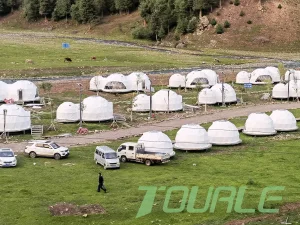
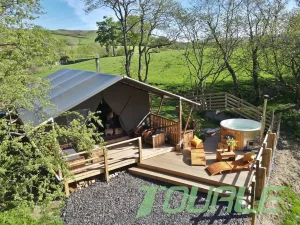
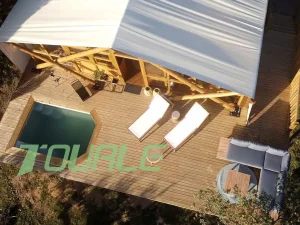
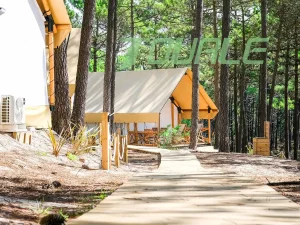
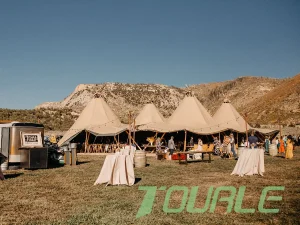
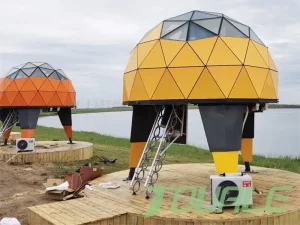
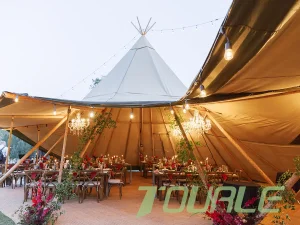
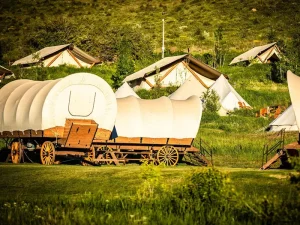
Review our extended range of customized safari tent lodges, geodesic stargazing pods, and authentic tipi structures tailored for international resorts.
Commercial Procurement & Engineering Q&A
Addressing core technical, financial, and logistical queries from hospitality developers and wholesale buyers.