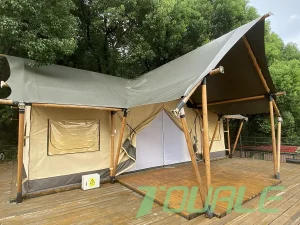
Commercial-Grade Glamping Structures Portfolio
Direct-from-factory modular accommodation units engineered for rapid deployment, high wind resistance, and maximum ROI yield.
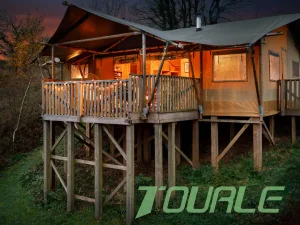
Famous Luxury T -type Safari Tent Hotel Tent Glamping House Exporter, Factories
View Specifications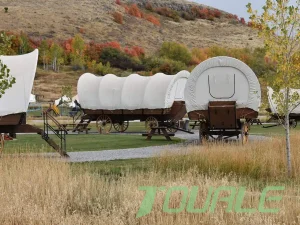
Buy Prefab House Luxury Wagon Canvas Safari Family Glamping Tent For Vacation Manufacturer, Supplier
View Specifications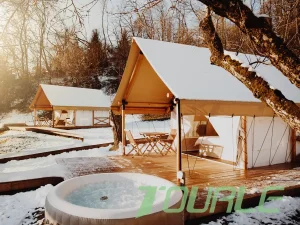
OEM High Quality China Glamping Tents Double Layer Waterproof Tent Big Winter Tent Cotton and Cold-Proof
View Specifications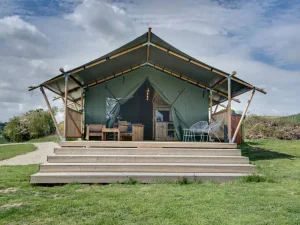
Buy Wholesale Discount Luxury Safari Prefabricated Houses Tents for Sale Products, Product
View Specifications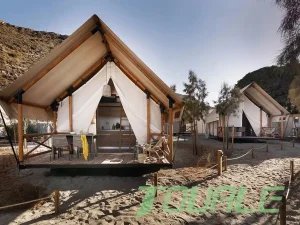
Best Hot Selling Safari Tent Luxury Hotel Beach Tents for Sale Companies, Pricelist
View Specifications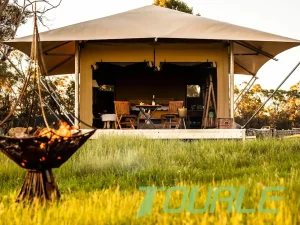
Best Glamping Hotel Safari Marquee Stretch Tent Tensioned Membrane Luxury Eco Strech Tent
View Specifications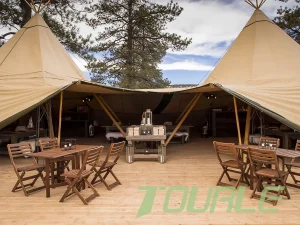
Best New Design Custom Portable Cotton Canvas Tipi Tent Glamping Resort Dinning Room
View Specifications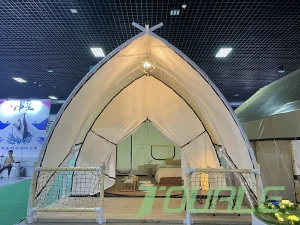
CE Certification Specially designed with steel structure double layers safari tent
View SpecificationsThe Global Commercial & Industrial Status of Glamping Infrastructure
The global glamping market has undergone a paradigm shift, transitioning from a niche experiential travel trend into a mainstream institutional real estate asset class. Commercial operators, resort developers, and agricultural landholders are increasingly adopting prefabricated outdoor lodging structures to maximize RevPAR (Revenue Per Available Room) while dramatically minimizing upfront capital expenditure (CAPEX) and site disruption.
North American & European Expansion
Driven by high domestic travel demand, North America and Europe dominate the commercial acquisition of luxury canvas safari tents and geodesic dome structures. Developers prioritize code-compliant flame retardancy (NFPA 701, DIN 4102 B1), heavy snow-load ratings, and modular floor plans that facilitate en-suite bathroom integration.
Emerging Eco-Resort Hotspots
Regions across Southeast Asia, Latin America, and the Middle East are rapidly leveraging lightweight, tensioned membrane structures for eco-tourism. The non-permanent nature of structural glamping tents bypasses stringent traditional building permit cycles, allowing resort launches in under 90 days on protected coastal or rainforest land.
Institutional Capital Injection
Venture capital and private equity firms are deploying capital into multi-site glamping franchises. The core requirement for scale is securing structural glamping units for sale at predictable price points, backed by rigorous quality control, high durability (10+ year frame lifespans), and standardized replacement part availability.
The Precision & Cost-Efficiency Advantage of Chinese Manufacturing
How integrated industrial clusters, proprietary hardware engineering, and advanced fabric processing deliver institutional-grade glamping hardware at a fraction of Western production costs.
Complete Ecosystem Integration
Manufacturers like Sichuan Tulele Technology Co., Ltd. (Tourle Tent) operate within fully integrated industrial ecosystems in China. From raw Q235 steel tube extrusion and hot-dip galvanization to precision CNC canvas patterning and automated high-frequency welding, every component is produced under strict quality management systems (ISO9001).
In-House Hardware Production
Unlike Western assemblers who outsource component fabrication, Chinese direct suppliers manufacture proprietary steel connectors, tensioning systems, and aluminum alloy profiles in-house. This internal supply control eliminates a 30-40% middleman markup while guaranteeing tight tolerance engineering and rapid OEM customization.
Pre-Shipment Trial Assembly
To eliminate international project risks, top-tier Chinese manufacturers enforce rigorous full-scale trial assembly protocols prior to export. Every steel beam, PVDF outer roof, and canvas interior liner is erected, stress-tested, and color-coded, guaranteeing seamless installation upon site delivery anywhere in the world.
Glamping Structures For Sale Pricelist & Technical Matrix
Navigating the commercial pricing landscape requires a granular breakdown of structural typologies, material longevity, and load-bearing parameters. Below is an industrial procurement benchmark based on direct factory-gate (FOB China) pricing for commercial-grade glamping units.
| Structure Classification | Typical Size (m) | Est. Factory Price (FOB USD) | Primary Membrane / Canvas Spec | Wind / Snow Rating | Expected Lifespan |
|---|---|---|---|---|---|
| Cotton Canvas Bell Tent | Ø4m - Ø6m | $280 - $650 | 320g-900D Waterproof Cotton / Poly-Canvas | 80 km/h / Minimal | 3 - 5 Years |
| Emperor Twin-Pole Bell Tent | 6m x 4m | $450 - $950 | 360gsm Canvas, PU 3000mm, Anti-Mildew | 85 km/h / Light | 4 - 6 Years |
| Geodesic Dome Tent | Ø5m - Ø10m | $1,200 - $4,800 | 850g PVC Outer Membrane + Insulated Layer | 100-120 km/h / 0.5 kN/m² | 8 - 10 Years |
| Luxury Safari Canvas Lodge | 5m x 7m / 6m x 9m | $2,800 - $6,500 | Double Layer: PVDF Outer Roof + 850g Canvas | 100 km/h / 0.3 kN/m² | 10 - 15 Years |
| Tensioned Membrane Shell Unit | Custom Shapes | $3,500 - $8,500 | 1050g PVDF Architectural Tensile Membrane | 120 km/h / 0.6 kN/m² | 15+ Years |
| Space Capsule / Glamping Pod | 8m x 3.3m x 3.2m | $12,000 - $28,000 | Aviation Aluminum Shell + Low-E Glass Wall | 130 km/h / Heavy | 25+ Years |
Total Cost of Ownership (TCO) & CAPEX ROI Formula
When analyzing "cheap glamping structures for sale," procurement teams must look beyond initial unit purchase prices. A holistic CAPEX calculation includes: Total Investment = (Unit Structure Price + Wooden/Steel Platform Decking + En-Suite Bathroom Pod + Freight & Import Duty + On-Site Assembly). Because Chinese factory-direct pricing reduces structural costs by up to 50% compared to local distribution models, commercial operators routinely achieve full ROI payback within the first 6 to 10 months of operations at a 65% occupancy rate.
Localized Application Scenarios & Climate Adaptation
Engineered structural variants tailored for harsh environment performance—from arid desert sands to sub-zero alpine conditions.
Alpine & Heavy Snow Zones
Geodesic domes and double-roofed safari lodges feature high-pitch angles and multi-layer thermal insulation liners. Compatible with integrated wood-burning stove jacks and HVAC ducting to maintain internal 22°C comfort in -20°C ambient temperatures.
Desert & High-UV Arid Climates
Utilizing PVDF outer flysheets treated with UV-resistant coatings. These reflective outer shields block 98% of solar radiation, reducing interior cooling loads while protecting inner canvas walls from UV degradation and embrittlement.
Coastal & High-Humidity Environments
Structure frameworks built with hot-dip galvanized steel or anodized 6061-T6 aluminum profiles resist salt-spray corrosion. Heavy-duty anti-fungal treatments ensure canvas membranes prevent mold spores in tropical humidity.
Eco-Protected & Off-Grid Parks
Non-permanent ground screw foundations allow full installation without concrete footings. Ideal for national parks, agricultural land, and nature reserves where environmental impact zero-trace mandates are enforced.
Global Enterprise Procurement Guide: Step-by-Step OEM/ODM Workflow
Acquiring commercial glamping structures at scale requires a structured engineering and procurement methodology. From initial masterplan CAD reviews to final site commissioning, adhering to standard OEM/ODM protocols minimizes project delays and ensures regulatory compliance.
Site Masterplan & CAD Layout
The buyer provides topographic maps, wind zone data, and target key counts. Factory engineers map layout dimensions, deck foundation anchor points, and mechanical/electrical routing pathways.
Material & Specification Customization
Selection of structural frame wall thickness, membrane weights (e.g., PVDF 850g/950g), flame-retardant standard certifications, window placement, door lock mechanisms, and interior wall insulation thickness.
Pre-Shipment Quality Control & Trial Assembly
The factory manufactures the batch and conducts a complete 1:1 structural trial assembly in the facility. Structural load tests are performed, and video inspection packages are delivered to the client prior to container packing.
Future Innovations in Commercial Glamping Engineering
How technological convergence is creating self-sustaining, smart, and ultra-durable prefabricated eco-hospitality modules.
1. Solar-Integrated Tension Membranes
Integration of flexible thin-film photovoltaic (BIPV) cells directly into PVDF tent outer membranes. This enables off-grid glamping structures to generate independent electricity for lighting, device charging, and ventilation without aesthetic compromise.
2. Prefabricated Modular Bathroom Pods
The shift toward turn-key composite bathroom pods that plug directly into safari tents and dome structures. Delivered with pre-fitted plumbing, showers, smart toilets, and vanities, reducing local MEP installation labor by up to 80%.
3. Advanced Graphene Thermal Insulation
Implementation of lightweight graphene composite insulation linings replacing traditional rock wool or bubble wrap. Provides superior thermal resistance (R-value) at a fraction of the weight and bulk, drastically lowering export container shipping volumes.
Frequently Asked Questions (FAQ) for B2B Buyers
Commercial, engineering, and logistics insights for resort operators and purchasing managers evaluating Chinese suppliers.
Additional Commercial Glamping Structures
Explore our complete catalog of geodesic domes, star capsules, bell tents, and modular safari lodges for immediate global export.
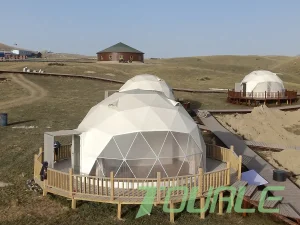
Buy A grassland camp consisting of 6 -meter diameter dome tent Company, Supplier
View Specifications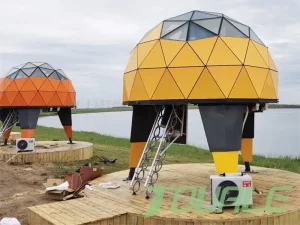
Best New design exclusive star capsule space technology loft dome tent panoramic glass window
View Specifications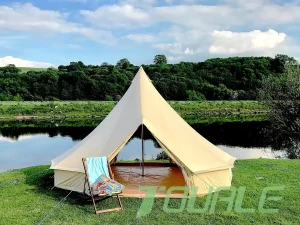
Buy Family Outdoor Tent Canvas Double Door Bell Tent 3M 4M 5M 6M 7M Tent For Camping
View Specifications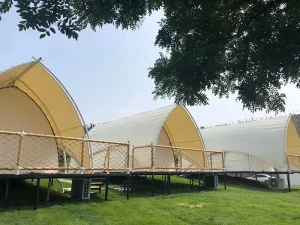
Cheap Tourle new design camping resort tent shell shape luxury safari glamping tent
View Specifications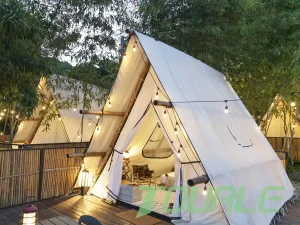
OEM Forest tent outdoor camping resort family Safari tent Product, Company
View Specifications
Wholesale Wooden 5x9m Outdoor Hotel Waterproof Canvas Glamping Luxury Loft Safari Tent
View Specifications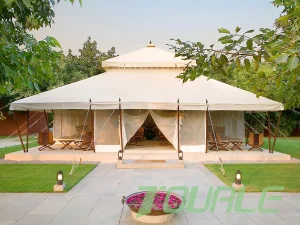
Best Waterpoof PVC Coated Outdoor Tents Aman Safari Iodge Tent For Subtropical Area
View Specifications