
Featured Four-Season Winter Glamping Solutions (Catalog Part I)
Explore our flagship series of thermally insulated atrium tents, heavy-duty safari lodges, and engineered canvas structures designed for sub-zero alpine performance and high guest turnaround.
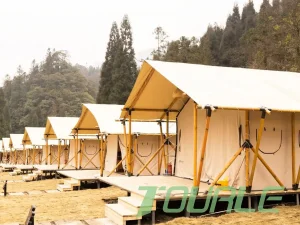
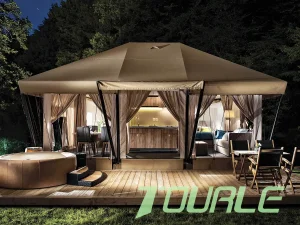
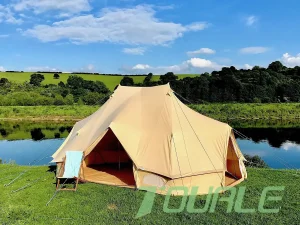
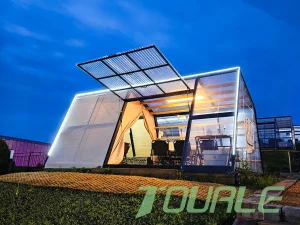
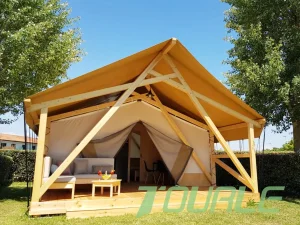
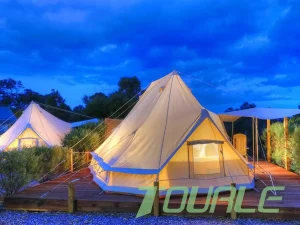
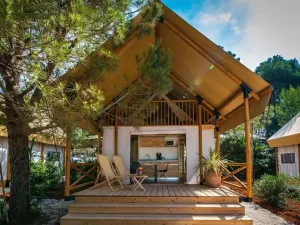
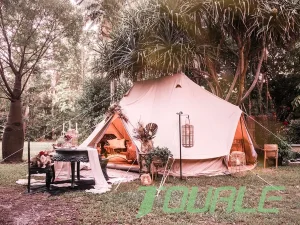
Macro Industry Outlook: The 365-Day Four-Season Glamping Revolution
The global outdoor hospitality and experiential glamping market has undergone a fundamental paradigm shift. Historically, tented resorts operated on a seasonal model, shuttering operations during freezing autumn and winter months due to thermal leakage, interior condensation, and structural vulnerability to snow loads. However, empirical market data reveals that year-round operations boost resort EBITDA by up to 47%, driving intense demand for affordable yet structurally robust insulated atrium tents.
An Atrium Tent with Insulation for Winter bridges the gap between traditional lightweight camping shelters and permanent brick-and-mortar hotel suites. Featuring panoramic clear-span roofs, double-layered TPU/PC atrium windows, and multi-layered foil-faced synthetic thermal wadding, these structures allow guests to enjoy starlit winter views and snowscapes without suffering sub-zero interior temperatures. Commercial resort developers require reliable factory-direct quotes and custom OEM/ODM exporting channels to deploy these units at scale.
Thermal Physics & Energy Balance in Insulated Atrium Tents
Achieving warmth in a temporary structure without inflating HVAC operating expenditures requires precise thermal engineering. The core heat-loss mechanisms in outdoor tents are radiation through uninsulated membrane fabrics, convective losses along unsealed perimeter seams, and conductive transfer through floor decks. Modern OEM manufacturers solve this through a multi-tier insulation matrix:
Radiant Thermal Barriers
Low-emissivity (Low-E) aluminum foil laminates reflect interior radiant heat back into the living quarters while preventing external cold radiation from entering.
Dead-Air Layering
Synthetic silk cotton or hollow polyester fiber insulation creates trapped dead-air pockets, drastically lowering the overall heat transfer coefficient (U-value).
Dual-Layer Atrium Windows
Heavy-duty optical TPU skylights are engineered with magnetic thermal curtains or inflatable double-skin PVC layers to eliminate window fogging and cold drafts.
China Factory Ecosystem & Cost-Effective Procurement Economics
When global resort developers, campsite owners, and event rental distributors search for a cheap atrium tent with insulation for winter, "cheap" must not imply compromised safety or low material quality. Instead, it reflects the unparalleled supply chain efficiency and economies of scale offered by specialized manufacturing hubs in China, such as the Sichuan Tulele Technology (Tourle Tent) manufacturing cluster in Chengdu.
Vertical Integration: From Hardware Fabrication to Automated Canvas Sewing
Western tent suppliers frequently act as middleman branders, outsourcing frame extrusions, metal connectors, and canvas tailoring to disparate sub-contractors. This fragmented supply chain bloats wholesale quotes by 60% to 120%. In contrast, premier Chinese source exporters maintain fully integrated 18,000㎡ to 20,000㎡ industrial parks featuring:
- In-House Metalworking & CNC Hardware Plants: Precision bending of Q235 hot-dip galvanized steel frames and T6061/T6 structural anodized aluminum profiles with zero rust risk.
- Automated Laser Cutting & High-Frequency Welding: Ultrasonic sealing of multi-layer waterproof PVC membranes (650g/㎡ to 1050g/㎡) ensuring zero water entry along insulated seams.
- Dedicated Thermal Fabric Crafting: Custom quilting of organic cotton canvas, flame-retardant polyester, and thermal wadding layers directly inside the main assembly line.
- Full Pre-Shipment Trial Assembly (QC): Every insulated atrium tent undergoes pre-shipment structural mock-ups to confirm frame zero-tolerance fit, zipper smooth-action, and complete accessory packing.
This complete in-house production ecosystem reduces unit costs, allows extensive OEM/ODM customization, and enables exporters to provide competitive wholesale quotes without sacrificing structural reliability.
Technical Specification & Thermal Insulation Comparison Matrix
Selecting the correct winter tent configuration requires matching material engineering to localized climate conditions. Below is a comprehensive engineering breakdown contrasting traditional uninsulated tents against our advanced double and triple-layer insulated atrium models.
| Performance Spec / Tent Class | Standard Uninsulated Canvas | Single-Layer PVC Atrium Tent | Double-Layer Insulated Atrium Tent | Triple-Barrier Arctic Atrium Lodge |
|---|---|---|---|---|
| Target Temperature Range | 10°C to 35°C | 5°C to 40°C | -15°C to 40°C | -35°C to 45°C |
| Thermal Resistance (R-Value) | R-0.8 | R-1.1 | R-3.2 | R-4.8 |
| Insulation Composition | None (Single Layer Cotton) | None (Clear PVC/TPU Skin) | Foil + 150g/㎡ Silk Cotton Layer | Low-E Foil + 300g/㎡ Fiber + Air Gap |
| Snow Load Rating | 10 - 15 kg/m² | 20 - 25 kg/m² | 35 - 40 kg/m² | 50 - 65 kg/m² |
| Wind Resistance Class | Level 7 (50-61 km/h) | Level 9 (75-88 km/h) | Level 10 (89-102 km/h) | Level 11-12 (103-120 km/h) |
| Condensation Mitigation | Passive Roof Venting | High Risk of Condensation | Anti-Fog TPU + Breathable Liner | Dual Vapor Barrier + HVAC Porting |
| Fire Retardancy Standard | Waterproof Treated Only | DIN 4102 B1 Compliant | DIN 4102 B1 / NFPA 701 / CE | DIN 4102 B1 / NFPA 701 / CE |
| Relative Cost Index | Baseline ($) | +25% ($$) | +55% ($$$) | +85% ($$$$) |
Global Deployment Scenarios & Localized Use Cases
Insulated atrium tents are engineered to perform across diverse global topographies. By combining modular steel frames with high thermal retention fabrics, commercial procurement officers can customize these units to meet distinct regional challenges.
Alpine Ski Resorts & Basecamps
Deployed at high altitudes (2,500m+) where heavy snowfall and ice accumulation strain standard shelters. Integrated stove jack ports and reinforced steel trusses maintain interior temperatures at 22°C even during -25°C blizzards.
Nordic Aurora Stargazing Domes
Utilizing crystal-clear anti-UV TPU atrium roof panels, these units provide uninterrupted views of the Northern Lights while keeping guests comfortably warm with radiant floor heating systems.
Winter Weddings & Commercial Venues
Large clear-span atrium structures (15m to 25m width) serve as pop-up banquet halls and event pavilions, eliminating cold drafts via double-zippered magnetic entrance vestibules.
Featured Four-Season Winter Glamping Solutions (Catalog Part II)
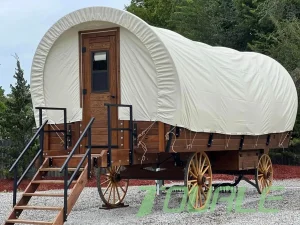
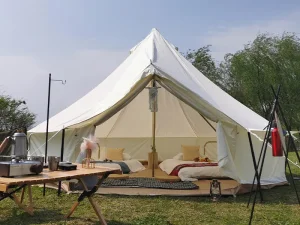
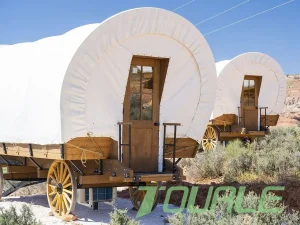
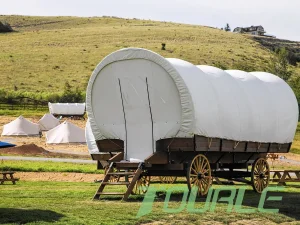
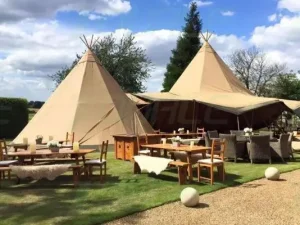
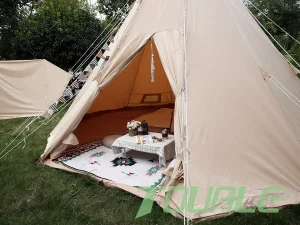
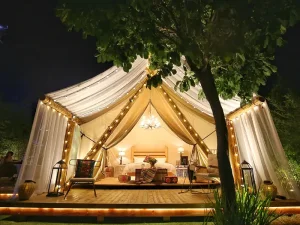
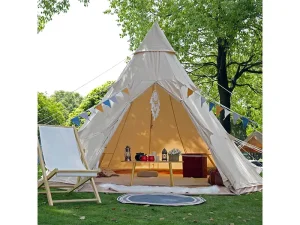
Complete your resort procurement plan with specialized bell tents, carriage glamping units, teepees, and high-peak event atriums direct from our factory lines.
B2B Purchasing, Customs Compliance & Freight Engineering
Importing heavy-duty winter atrium tents requires careful planning around customs compliance, international structural engineering standards, and logistics containerization. As leading exporters since 2010, Tourle Tent provides complete documentation and knock-down structural packaging to minimize global shipping tariffs.
International Structural & Safety Compliance Standards
Commercial developments cannot secure operational permits or insurance coverage without validated third-party testing certifications. Our insulated atrium tents comply with rigorous global codes:
Fire Safety Standards
Certified under European DIN 4102 B1/M2 and American NFPA 701 / CPAI-84 fire retardancy protocols. Self-extinguishing fabrics ensure complete guest safety.
Structural Wind & Snow Load
Engineered in compliance with EN 13782 for temporary structures. Calculations verified for structural integrity against localized wind gusts up to 120 km/h.
Eco-Friendly & REACH Compliance
All interior insulation layers and PVC membranes pass EU REACH testing for zero harmful chemical off-gassing or formaldehyde emissions in sealed winter environments.
Logistics Optimization: Knock-Down Packaging Architecture
International ocean freight costs can significantly impact total project budget. Our structural frames feature modular, quick-connect aluminum and galvanized steel joints that nest compactly into heavy-duty wooden crates. A single 40ft High-Cube (40HQ) container can accommodate up to 15 to 20 fully insulated glamping atrium units, drastically lowering per-unit freight overhead.
Frequently Asked Questions (FAQ) for Winter Atrium Tent Importers
Direct technical answers to common questions asked by resort operators, engineering procurement companies (EPCs), and wholesale importers.