
CE Certified Commercial Glamping Units
Explore our top-tier engineered tent structures, fully compliant with international building codes and EU safety directives.
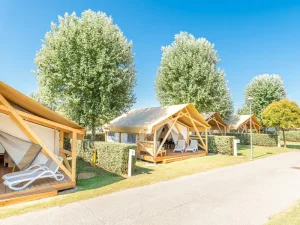
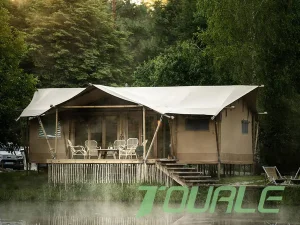
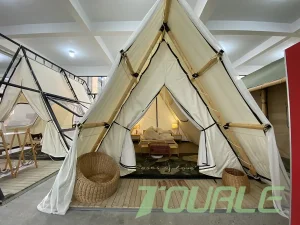
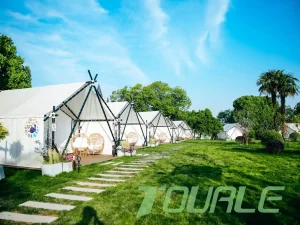
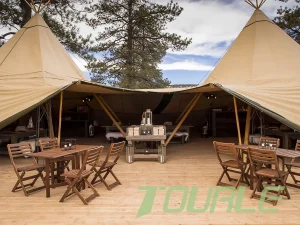
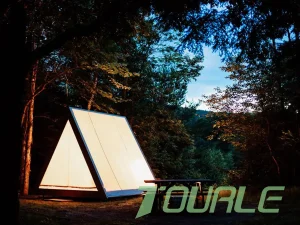
Executive Summary: Engineering the Next Generation of Luxe Tenten Camping
The global hospitality sector is undergoing a seismic paradigm shift. Traditional brick-and-mortar hotel investments are increasingly hindered by soaring construction costs, lengthy permitting cycles, severe environmental disruption, and prolonged return-on-investment (ROI) timelines. In response, experiential outdoor hospitality—commonly framed as Luxe Tenten Camping or high-end glamping—has transitioned from a niche leisure trend into an institutional-grade asset class.
However, commercializing outdoor lodging requires more than standard recreational gear. Commercial operators face stringent municipal zoning standards, structural wind-load requirements, structural safety mandates under EN 13782, and strict flame-retardant compliance standards (such as DIN 4102 B1, M2, and NFPA 701). Sourcing non-compliant equipment introduces catastrophic operational risks, ranging from structural collapse during extreme weather events to uninsurable liability and immediate municipal closure orders.
Section 1: Global Market Trends & Eco-Hospitality Dynamics
According to market research analysis, the global glamping market size is projected to expand at a compound annual growth rate (CAGR) exceeding 12.8% through 2032. This surge is driven by three primary commercial drivers:
- Demand for Eco-Luxe Escapism: High-net-worth travelers prioritize authentic natural experiences without sacrificing modern residential luxuries such as en-suite bathrooms, HVAC climate control, and architectural aesthetic appeal.
- Low-Impact Sustainable Development: Governments and environmental protection agencies enforce strict non-permanent building restrictions in national parks, coastal reserves, and agricultural lands. Modular CE-certified tenten camping systems offer semi-permanent foundations that leave zero permanent ecological footprint.
- Rapid Asset Yield & Flexibility: While traditional luxury resort builds require 3 to 5 years from planning to realization, a 30-unit CE-certified luxe tenten camping project can be manufactured, exported, and fully commissioned within 90 to 120 days.
High Capital Efficiency
Achieve up to 40-60% gross operating margins with capital expenditure recovery typical within 14-18 months of operational launch.
Certified Compliance
Full CE approval guarantees wind resistance up to 120 km/h, UV50+ fabric durability, and certified flame retardancy under European standards.
Modular Versatility
Easily scale, reconfigure, or relocate structures according to seasonal demand, land lease agreements, or venue requirements.
Section 2: Global B2B Enterprise Procurement Demands & Risk Mitigation
When enterprise buyers—such as resort hotel groups, campsite franchise operators, and commercial rental companies—procure glamping hardware, technical evaluations extend far beyond aesthetic design. Technical buyers must audit structural engineering factors to mitigate financial, operational, and legal liabilities:
| Technical Parameter | Standard Commercial Grade (Uncertified) | Tourle Tent CE Certified Engineering Grade | Commercial Risk Impact |
|---|---|---|---|
| Structural Framework | Thin-wall untreated timber or thin steel tubing | Heavy-duty galvanized steel / Pressure-treated anti-fungal timber frame | Untreated structures fail under sustained wind loads >80 km/h, causing total structural collapses. |
| Membrane Specification | Single-layer basic PVC or polyester blend | 3-Layer PVDF/PVC coating, 850g/m², 900D Oxford / Organic Cotton Canvas | Inferior fabrics degrade under high UV within 12 months, leading to interior water leaks and mold growth. |
| Fire Safety Rating | Non-rated or basic treatment | DIN 4102 B1 / M2 / NFPA 701 Fire Retardant Certification | Non-compliant fabrics fail municipal fire inspections, preventing operational licensing. |
| Thermal Insulation | None (Single wall membrane) | Multi-layer thermal insulation liner + Double-glazed options | Uninsulated units become uninhabitable during winter cold or summer heat, killing occupancy rates. |
| Pre-Shipment QC | Random batch checks | 100% Full-Process Pre-Shipment Trial Assembly | Missing brackets or mismatched canvas during installation stall site workers and multiply assembly costs. |
Section 3: China Factory 4.0: Supply Chain Resilience & Tourle Tent Manufacturing Advantage
Located in Chengdu, Sichuan, Sichuan Tulele Technology Co., Ltd. (Tourle Tent) operates an 18,000 square meter advanced manufacturing facility. Founded in 2010, Tourle Tent has continuously upgraded its production apparatus to match Industry 4.0 automated fabrication workflows.
A central competitive advantage of Tourle Tent is our in-house hardware manufacturing facility established in 2019. While conventional tent suppliers rely on outsourced third-party vendors for structural steel connectors, tension cables, and mounting brackets—introducing delivery delays and quality discrepancies—we produce all structural hardware components in-house.
Key Manufacturing Capability Milestones:
- Automated CNC Laser Cutting & Cutting Tables: High-precision membrane pattern cutting ensures millimeter-accurate alignment across double-fabric and three-layer canvas assemblies.
- High-Frequency Thermal Welding: Seamless PVDF/PVC seam sealing guarantees 100% hydrostatic waterproof resistance even under torrential rainfall pressure (>3000mm water column).
- Full-Process Pre-Shipment Trial Assembly: Every single structural frame and canvas kit undergoes a complete trial assembly erection at our factory floor prior to seaworthy export packaging. This rigorous protocol eliminates missing hardware, alignment mismatches, or missing tension points before containers leave China.
- Global Logistics & Supply Chain Resilience: Our Chengdu logistics hub leverages direct rail and ocean freight routes to Europe, North America, Southeast Asia, and the Middle East, offering robust supply chain stability regardless of global shipping disruptions.
Section 4: Localized Application Scenarios & Global Deployment
Tourle Tent’s CE-certified luxe tenten camping structures are engineered to thrive in punishing localized environments across the globe:
1. Alpine & Snowy Mountain Resorts
In cold, high-altitude climates, snow loading and thermal retention are critical engineering factors. Our Double Fabric Safari Tents for Snowy Mountain Campgrounds and Geodesic Domes utilize dual-layer thermal insulation curtains, internal stove jack ports, and high-pitch geometry that sheds snow accumulation while keeping indoor temperatures comfortable down to -20°C.
2. Coastal, High-Humidity & Island Environments
Tropical resorts face relentless exposure to high humidity, salt spray corrosion, and severe UV rays. Tourle Tent utilizes marine-grade hot-dip galvanized steel framing, pressure-treated timber, and anti-fungal, mildew-resistant Oxford/PVDF fabrics that resist tropical rot and prevent color fading under high UV indexes.
3. Desert & Arid Glamping Hubs
High desert environments experience extreme diurnal temperature fluctuations—boiling daylight heat followed by freezing nocturnal temperatures. Our three-layer fabric wooden safari T9 series creates insulated air gaps that block radiant solar heat during the day and retain warmth overnight, reducing HVAC power consumption by up to 35%.
4. High-End Event Rentals & Luxury Weddings
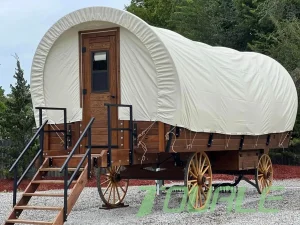
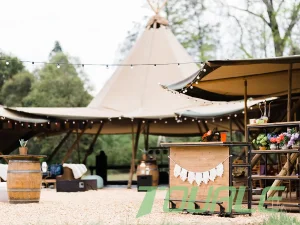
For event rental fleets, multi-disassembly speed and structural durability are key. Our Waterproof Cotton Wedding Tipi Tents and Mobile Carriage Tents provide fast tool-free assembly, compact transport volume, and photogenic visual appeal that command premium daily rental rates.
Frequently Asked Questions (FAQ)
Essential technical and procurement insights for commercial campsite developers, resort investors, and enterprise buyers.
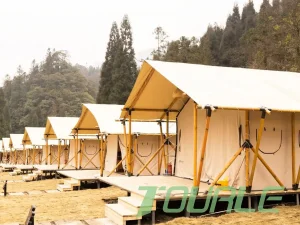
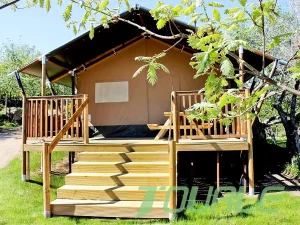
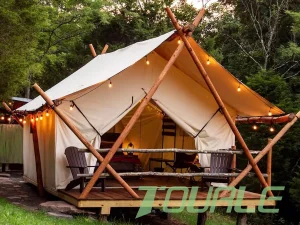
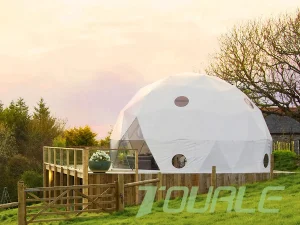
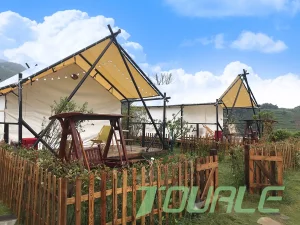
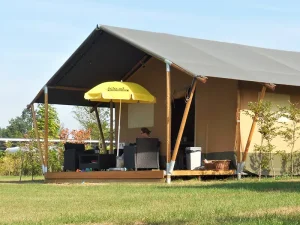
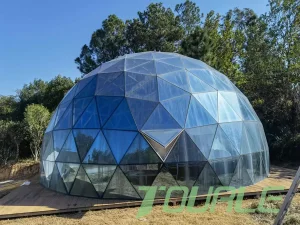
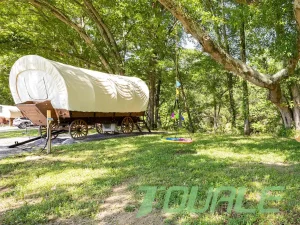
Specialty Safari Lodges & Geodesic Domes
Complete your site development with our versatile line of mountain safari cabins, stargazing domes, and mobile wagon tents.
Ready to Engineer Your Eco-Resort Project?
Connect directly with Tourle Tent’s engineering and sales specialists to request custom drawings, factory-direct pricing, and comprehensive CE documentation.
Request Instant Quotation & Catalog