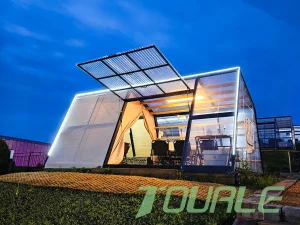
Featured Hotel Tent Architectures (Top Series)
Precision-crafted, climate-resilient resort accommodations engineered for rapid ROI and seamless integration into high-end eco-tourism developments.
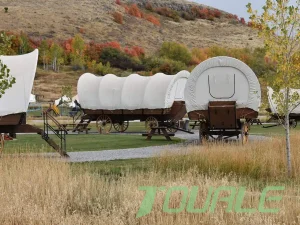
Prefab House Luxury Wagon Canvas Safari Family Glamping Tent
Inquire Specifications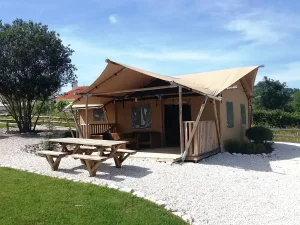
Wholesale Prefabricated House Waterproof Luxury Glamping African Safari Lodge Tent
Inquire Specifications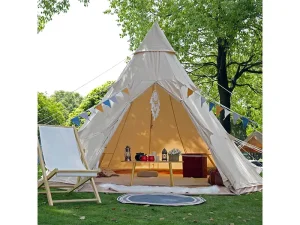
High-Quality Glamping Cotton Canvas Pyramid Tipi Camping Tent
Inquire Specifications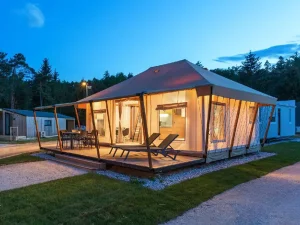
Light Luxury Style Large Space Safari Hotel Glamping Tent
Inquire Specifications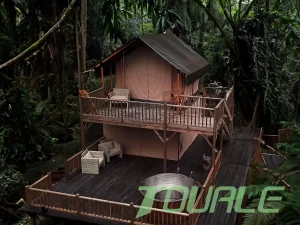
Double-layer Wooden Structure Waterproof & Fireproof Mini Safari Tent
Inquire Specifications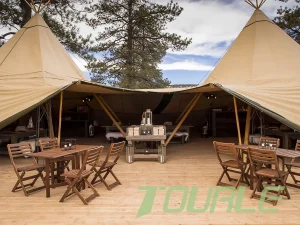
Custom Portable Cotton Canvas Tipi Tent Resort Dining Room
Inquire Specifications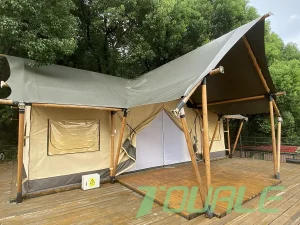
High-Quality M8-T Large Wooden Structure Outdoor Safari Hotel Tent
Inquire Specifications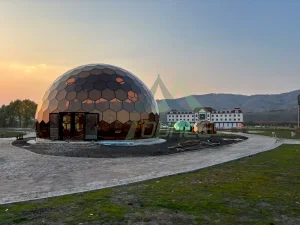
Honeycomb Glass Dome Tent Thermal Insulation Resort House
Inquire SpecificationsGlobal Enterprise Procurement Requirements for Commercial Glamping
Navigating structural risk, thermal efficiency, total cost of ownership (TCO), and architectural compliance in multi-unit resort deployment.
In the rapidly evolving luxury hospitality sector, commercial tented resorts have shifted from niche seasonal pop-ups to capital-intensive, high-yield permanent assets. Institutional investors, boutique hotel operators, and land developers face strict engineering demands when deploying luxury hotel tents at scale. Procuring glamping tents requires a rigorous technical evaluation far beyond surface aesthetics—demanding compliance with international building codes, structural wind/snow load capacities, acoustic isolation, and long-term envelope durability.
Optimized TCO & Accelerated ROI
Commercial glamping structures must achieve an operating life cycle exceeding 10–15 years with minimal maintenance overhead. Key financial metrics require high RevPAR potential paired with rapid assembly speed to shrink the payback window to under 18 months.
Structural & Climatic Resiliency
Resort-grade structures must engineered for extreme weather resistance: sustaining wind velocities up to Beaufort Scale 10–11 (100–120 km/h) and snow accumulation exceeding 0.5 kN/m² via finite element structural analysis (FEA).
Turnkey Utility Integration
Modern luxury tent procurement demands pre-engineered internal channeling for concealed HVAC ducting, plumbing conduits, high-speed fiber lines, and luxury en-suite bathroom module integration without sacrificing structural tightness.
China Factory 4.0: Supply Chain Resilience & Precision Engineering
Sichuan Tulele Technology Co., Ltd. operates an 18,000㎡ industrial campus utilizing robotic automated processing and proprietary hardware forging for absolute quality control.
In-House Hardware Forging & Metalwork
Unlike standard tent assemblers that rely on outsourced fittings, Tourle Tent established an independent hardware forging facility in 2019. Every connector, base plate, tensioning ratchet, and structural knuckle is manufactured internally using hot-dip galvanization (minimum coating thickness 80μm) to deliver C4/C5 corrosion protection against coastal salt-spray environments.
100% Pre-Shipment Trial Assembly Protocol
Eliminating site installation downtime for international clients, every manufactured unit undergoes complete pre-shipment trial assembly within our high-bay facility. Structural geometry, canvas tensioning tolerances, laser-cut alignment holes, and waterproofing membrane seams are inspected under rigorous ISO 9001:2015 quality assurance workflows before containerized export.
Macro Industry Solutions across Extreme Environments
From sub-zero alpine snowfields to arid high-UV deserts, our modular architectural envelopes deliver four-season climate regulation.
Alpine & Sub-Zero Mountain Resorts
Challenge: Heavy snow loads, thermal bridge heat loss, structural ice formation.
Engineering Solution: Multi-layered insulated roof membranes combined with high-pitch tension geometries (30°+ roof angles) to prevent snow retention. Structural frames utilize high-yield steel Q235/Q355 with internal thermal break insulation pads and double-glazed low-E glass facade panels.
Arid Desert & High-UV Eco-Lodges
Challenge: Intense solar radiation, rapid thermal expansion, abrasive windborne sand.
Engineering Solution: Outer rainfly barriers treated with PVDF/PVF surface coatings blocking 99% of UV rays (UPF 50+). Inner liners incorporate reflective radiant heat barriers, decreasing indoor cooling loads by up to 35% under peak 45°C ambient temperatures.
Coastal & Tropical Island Retreats
Challenge: High-humidity corrosion, tropical storm force winds, mold/fungal risks.
Engineering Solution: Marine-grade anodized aluminum alloys (6061-T6) combined with 316 stainless steel tension cables. Outer membranes utilize anti-fungal, anti-microbial synthetic canvas treated to resist hydrostatic pressure exceeding 3,000mm H₂O.
CE Certification, Structural Safety & Localization Support
Simplifying international permitting, environmental compliance, and site installation for global resort operators.
Gaining municipal building approvals and commercial operational permits in the European Union, North America, and Australia requires certified compliance documentation. Tourle Tent’s product engineering aligns with international building codes and fire safety mandates:
CE Standard EN 13782 & EN 1090-2 Compliance
Our structural designs satisfy European Standard EN 13782 (Temporary Structures - Tents) and EN 1090-2 execution standards for steel and aluminum components. Full technical calculation dossiers are available to support client architectural filing with local building authorities.
Global Flame Retardancy Standards
Architectural membranes and canvas fabrics meet rigorous fire safety standards worldwide, including European DIN 4102 B1/M2, American NFPA 701, and Australian AS 1530. Fabrics are self-extinguishing and generate non-toxic smoke profiles during emergency conditions.
Technical Roadmap & Future Outlook (2025–2030)
Pioneering next-generation smart tented hospitality through integrated photovoltaic membranes, IoT environmental sensors, and circular bio-composites.
BIPV Solar Membrane Integration
Developing ultra-lightweight, flexible Building-Integrated Photovoltaic (BIPV) outer rainflies that generate off-grid electricity for lighting and climate control without adding structural dead-load weight.
Smart IoT Structural Health Monitoring
Embedding real-time strain gauges and humidity/wind sensors into primary structural nodes. Automated alerts notify resort operations managers of tension adjustments required prior to severe storm events.
Circular Bio-Based Architectural Canvas
Transitioning toward 100% recyclable mono-material TPU covers and bio-based cotton-flax canvas blends that achieve complete cradle-to-cradle sustainability for ultra-eco sensitive reserves.
Frequently Asked Technical Questions (Q&A)
In-depth technical and operational answers for resort developers, procurement managers, and commercial engineers.
How does CE certification guarantee the structural safety of hotel tents in commercial resorts?
What materials are utilized to ensure long-term UV resistance, waterproofing, and fire retardancy?
Can Tourle Tent units be customized for OEM/ODM resort floor plans and en-suite bathrooms?
How does Tourle Tent control product quality prior to international export?
What foundation and deck preparations are required prior to installing luxury safari or dome tents?
What is the estimated service life and warranty coverage for commercial hotel tents?
How are heating, cooling, and acoustic comfort managed inside tented accommodations?
Featured Hotel Tent Architectures (Bottom Series)
Explore our expanded series of commercial dome tents, safari cabins, bell tents, and custom modular glamping structures.
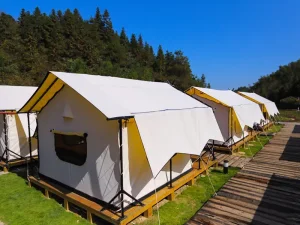
OEM 4X6.4m B100 Outdoor Family Camping Luxury Resort Tent
Inquire Specifications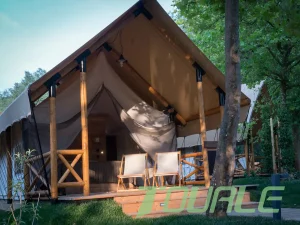
ODM Wholesale Luxury Resort Glamping Outdoor Safari Tent
Inquire Specifications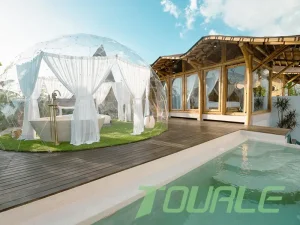
Luxury Geodesic Dome House Polycarbonate Transparent Cover
Inquire Specifications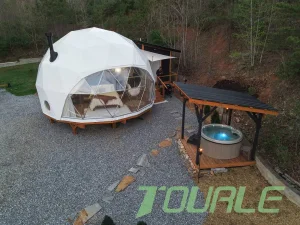
Custom 6m Tourism Geodesic Dome Glamping Hotel Tent
Inquire Specifications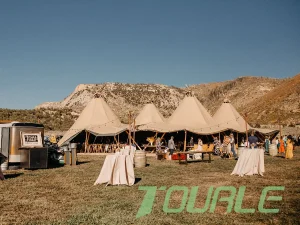
Custom Four Component Tipi Tent Outdoor Luxury Wedding Event
Inquire Specifications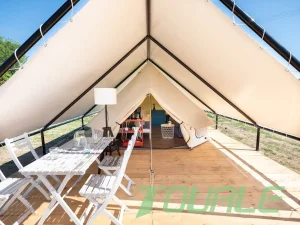
4-Season Waterproof Cotton Canvas Family Bell Glamping Tent
Inquire Specifications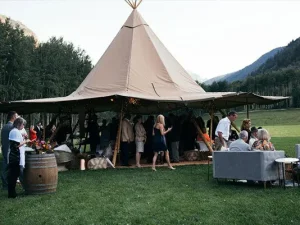
Cotton Canvas Waterproof Large Outdoor Party Tipi Tent
Inquire Specifications