
How to Buy Lodge Tents in Bulk for Sale?
Buying lodge tents in bulk can reduce unit costs, but a low quote does not guarantee a dependable product. A tent that looks impressive in a showroom may behave differently after repeated setup, rain, and strong sun. Start with the intended use: seasonal guest accommodation, a campsite, or a permanent-looking retreat. Each setting calls for different fabric, frame strength, ventilation, and maintenance.
Ask suppliers for clear specifications, not just attractive photos. Check fabric weight, waterproofing details, seam construction, pole materials, door dimensions, and packed size. Request a sample or inspect a finished unit before committing to a large order. Small details matter. A zipper that catches or a pole joint that feels loose can become a daily frustration across dozens of tents. Confirm production capacity, quality-control steps, packaging, spare-part availability, and realistic delivery dates in writing. These checks help buyers compare offers on more than price.
For Tente Lodge Vente, treat supplier selection as a practical review, not a quick transaction. Ask for references from comparable hospitality projects and clarify what the warranty covers. Also calculate the full landed cost, including freight, unloading, storage, and installation. A bulk discount can look good on paper. It may not survive those added costs. I would still leave room for uncertainty: weather, site conditions, and guest habits vary, and no specification sheet can predict every problem. A modest pilot order can reveal fit and finish before scaling up. That is slower, perhaps, but often wiser.
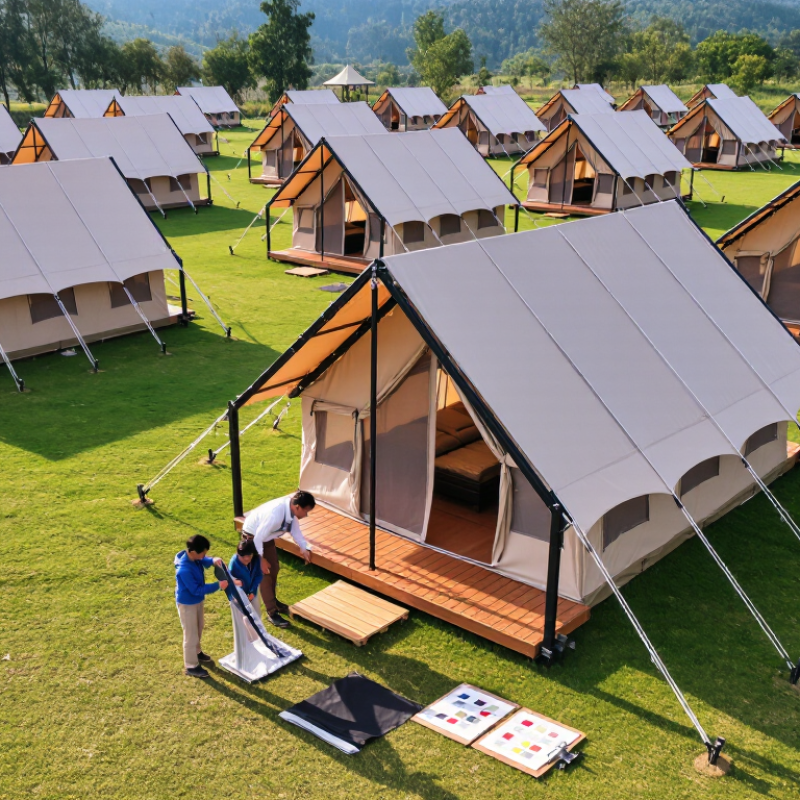
Define Lodge-Tent Capacity, Site Conditions, and ISO 5912:2020 Requirements
Before requesting bulk quotes, define capacity as usable sleeping space, not the maximum number of people that can fit inside. Allow room for beds, luggage, clear walkways, and accessible doors. Measure the footprint. A tent listed for eight may feel cramped when guests bring hard-sided cases or use cots. Ask suppliers for a dimensioned floor plan and the stated occupancy method, then compare models using the same layout.
Record each site’s ground slope, soil type, drainage, wind exposure, and access for installation. These details affect anchoring, placement, and maintenance. A flat drawing cannot reveal every site problem. I learned that the awkward corner near a drainage channel can matter more than an extra sleeping bay. Share site measurements and photographs with the supplier, and request anchoring guidance for the actual ground conditions.
Check ISO 5912:2020 carefully. It specifies safety and performance requirements and test methods for camping tents, but confirm whether the intended lodge-tent model and use fall within its scope. Request current test documentation tied to the exact model and materials, rather than relying on a general claim of compliance. Verify what the documents cover, including relevant weather and safety tests, and keep records with purchase specifications. Standards alone do not replace site-specific engineering or installation advice.
FAQS
Use practical sleeping space, not the maximum number of people who fit inside. Allow room for beds, luggage, clear walkways, and accessible doors.
It shows the usable footprint and layout. A tent listed for eight may feel cramped with cots and hard-sided cases.
Record slope, soil type, drainage, wind exposure, and installation access. Send measurements and photos. One awkward corner can change placement.
Confirm the standard covers the exact model and intended use. Request current test documents tied to its materials. Keep them with purchase records.
No. Standards do not replace engineering or installation guidance for actual ground conditions. That distinction is easy to miss.
Request ISO 811 hydrostatic-pressure reports for the exact fabric offered. Results are often stated in millimeters of water column.
Ask when and how samples were tested, and whether results are typical or minimum values. Coatings and fabric batches can differ.
No. It measures fabric resistance, not every seam, zipper, window, or roof joint. Not the whole story.
Request a sample tent. Check seams, sealing, and rain performance under realistic use. Ask how repairs are handled; one strong number is not enough.
Conclusion
Buying lodge tents in bulk starts with matching capacity to the number of guests, intended layout, and site conditions such as wind exposure, rainfall, and ground type. Confirm that the tent design and documentation address relevant ISO 5912:2020 requirements, then compare waterproofing claims using ISO 811 hydrostatic-pressure test results rather than relying on vague descriptions. Request fabric fire-test reports against NFPA 701 and check applicable local requirements before placing an order.
Evaluate supplier quotes side by side, including minimum order quantity, unit cost, production lead time, and freight. Before committing to a full run, approve a preproduction sample and agree on measurable factory quality checks for dimensions, seams, materials, and workmanship. A clear specification and inspection plan can make Tente Lodge Vente sourcing more predictable and help ensure the delivered tents meet the needs of the intended site and use.
